

The business landscape in 2026 is fundamentally different from just a few years ago. Companies are no longer debating whether to adopt artificial intelligence-they're racing to implement workforce AI solutions that can handle complex business operations autonomously. This shift represents more than technological advancement; it's a complete reimagining of how work gets done. Organizations across industries are discovering that AI agents can manage everything from customer inquiries to CRM updates, freeing human workers to focus on strategic initiatives that require creativity, empathy, and nuanced decision-making.
Understanding Workforce AI and Its Core Capabilities
Workforce AI refers to autonomous AI agents designed to execute business tasks traditionally performed by human employees. Unlike simple chatbots or automation tools, these agents can make decisions, take actions, and adapt to changing circumstances without constant human oversight. They represent a fundamental evolution in how businesses operate.
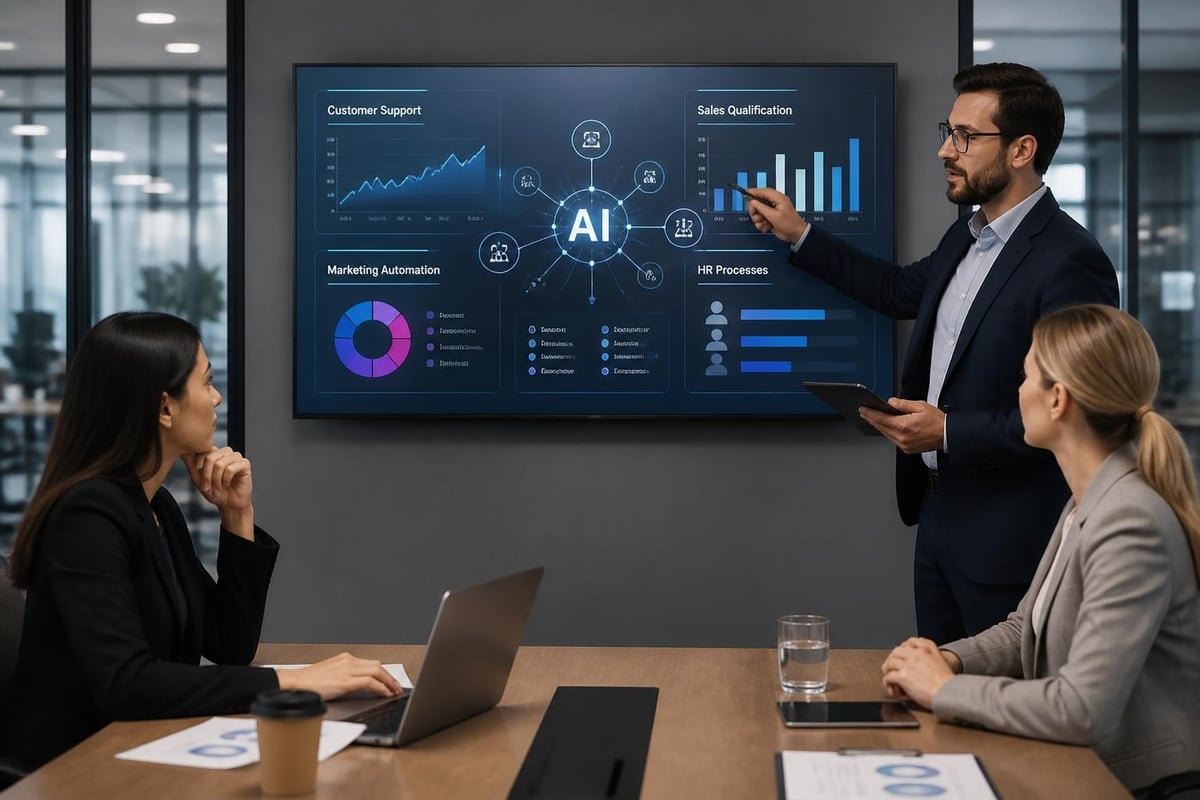
Modern workforce AI systems operate across multiple business functions simultaneously. These agents handle customer support tickets, qualify sales leads, update databases, schedule appointments, and manage marketing campaigns-all while maintaining consistency and accuracy. The technology has matured to the point where AI agents can operate in over 90 languages, making global business operations seamless.
Key Differentiators of Advanced Workforce AI
What separates true workforce AI from basic automation? Several critical capabilities define the category:
- Autonomous decision-making: Agents evaluate situations and choose appropriate actions without predefined scripts
- Cross-functional integration: Seamless operation across sales, support, marketing, and HR systems
- Real-time learning: Continuous improvement based on interactions and outcomes
- Multi-channel presence: Consistent operation across email, chat, phone, and social media
- Action execution: Actual task completion, not just recommendations
These capabilities enable workforce AI to function as genuine members of your team rather than passive tools. When a customer makes an inquiry, the agent doesn't just respond-it can check inventory, process orders, update your CRM, and schedule follow-ups autonomously.
The Economic Impact of AI-Driven Workforce Transformation
The financial implications of workforce AI adoption are staggering. According to MIT simulation research, AI could potentially impact positions worth $1.2 trillion in salaries across various sectors nationwide. However, this transformation isn't simply about replacement-it's about augmentation and evolution.
Companies implementing workforce AI report dramatic improvements in operational efficiency. Response times drop from hours to seconds. Error rates in data entry and routine tasks approach zero. Customer satisfaction scores climb as inquiries receive instant, accurate responses regardless of time zone or business hours.
ROI Metrics That Matter
Organizations measuring workforce AI impact focus on several key performance indicators:
| Metric Category | Traditional Operations | With Workforce AI | Improvement |
|---|---|---|---|
| Response Time | 4-24 hours | Under 1 minute | 95%+ faster |
| Error Rate | 3-5% | Under 0.1% | 98% reduction |
| Operating Hours | 40-168 hours/week | 168 hours/week | 24/7 coverage |
| Language Support | 1-3 languages | 90+ languages | 30x expansion |
| Scalability Cost | Linear with volume | Minimal incremental | 80%+ savings |
These improvements translate directly to bottom-line results. Businesses reduce operational costs while simultaneously improving service quality-a combination previously considered impossible.
Implementing Workforce AI Without Technical Barriers
One of the most significant barriers to AI adoption has historically been technical complexity. Businesses needed development teams, infrastructure management, and ongoing maintenance resources. The latest generation of workforce AI platforms eliminates these obstacles entirely.
Modern solutions like those offered through AI Textura enable organizations to deploy AI agents without writing code or managing servers. This democratization of AI technology means companies of any size can implement sophisticated automation.
Deployment Approaches for Different Business Needs
Hospitality and Customer Service: Hotels and service businesses deploy AI agents that handle reservations, answer guest questions, process special requests, and manage feedback. These agents integrate with booking systems and property management software, creating a seamless experience for both guests and staff.
E-commerce and Retail: Online retailers use workforce AI to manage product inquiries, process orders, handle returns, and provide personalized recommendations. The agents can access inventory systems in real-time and execute transactions autonomously.
B2B Sales and Lead Management: Companies implement AI agents that qualify leads, schedule demos, answer technical questions, and nurture prospects through the sales funnel. Integration with CRM platforms ensures every interaction is documented and actionable.
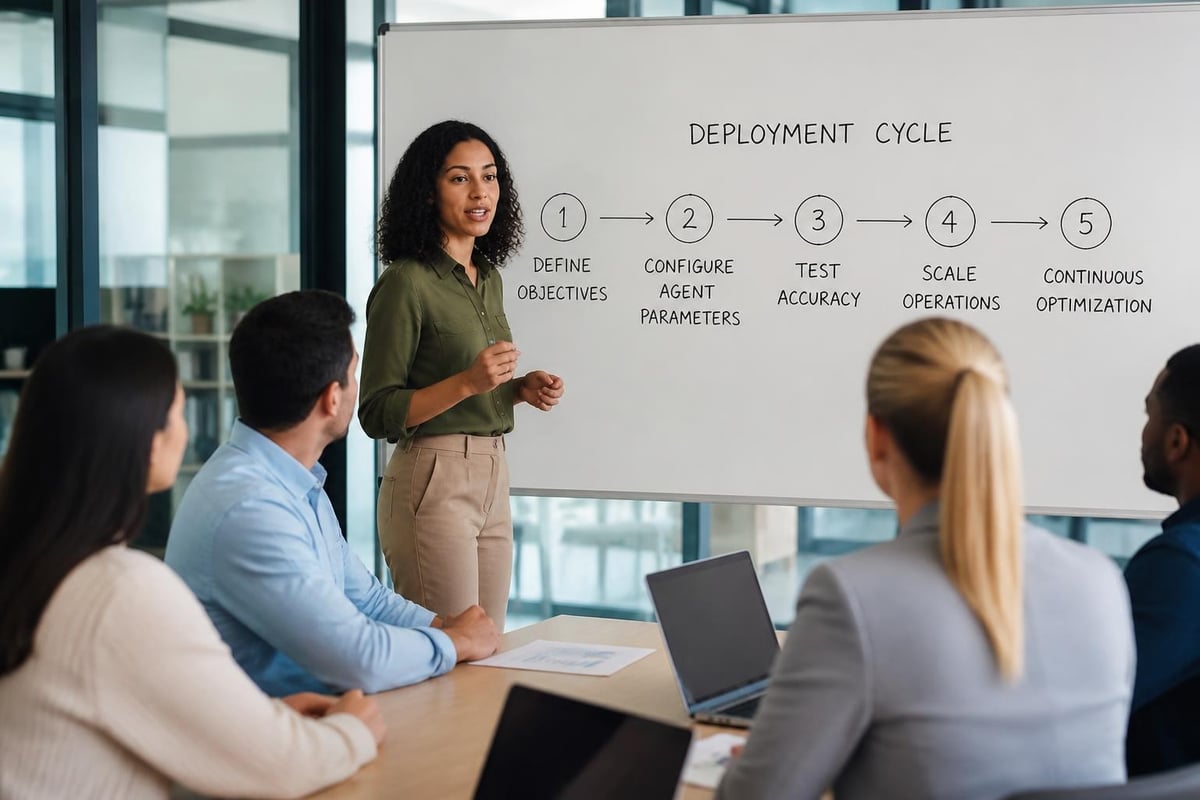
The implementation process typically follows these phases:
- Define scope and objectives: Identify which business processes will benefit most from AI automation
- Configure agent parameters: Set up the AI agent's knowledge base, decision-making frameworks, and integration points
- Test and refine: Run parallel operations to validate accuracy and adjust agent behavior
- Scale deployment: Gradually expand the AI agent's responsibilities as confidence builds
- Monitor and optimize: Track performance metrics and continuously improve agent effectiveness
Organizations implementing workforce AI through platforms that offer comprehensive integration capabilities find the transition smoother and more successful.
Governance and the Hybrid Human-AI Workplace
As workforce AI becomes more prevalent, organizations face new challenges in managing a hybrid workforce of humans and autonomous agents. Leadership must establish clear governance structures to ensure accountability, maintain ethical standards, and optimize collaboration between human and AI team members.
Successful governance frameworks address several critical areas:
- Decision authority boundaries: Clearly defining which decisions AI agents can make autonomously versus those requiring human approval
- Quality assurance protocols: Regular auditing of AI agent interactions to ensure accuracy and appropriate tone
- Escalation procedures: Establishing when and how AI agents should transfer complex situations to human colleagues
- Data privacy compliance: Ensuring AI agents handle sensitive information according to regulatory requirements
- Performance evaluation: Measuring AI agent effectiveness using consistent, meaningful metrics
Creating Effective Collaboration Models
The most successful implementations don't view workforce AI as a replacement strategy but as a collaboration multiplier. Human workers focus on complex problem-solving, relationship building, and strategic planning while AI agents handle repetitive tasks, data processing, and routine interactions.
This division of labor creates several advantages. Customer-facing human employees can dedicate more time to high-value interactions because AI agents handle the majority of routine inquiries. Sales teams focus on closing complex deals while AI agents nurture early-stage prospects. Marketing professionals develop creative campaigns while AI agents execute distribution, personalization, and initial response management.
For businesses looking to compare different AI workforce solutions, understanding how each platform supports this human-AI collaboration model is essential. The goal isn't maximum automation-it's optimal allocation of tasks based on which team member (human or AI) can deliver the best outcome.
Skill Development in an AI-Augmented Environment
The rise of workforce AI fundamentally changes which skills organizations value most. Workers are adapting to the AI era by developing capabilities that complement rather than compete with artificial intelligence.
Three skill categories are becoming increasingly valuable:
AI Oversight and Optimization: Professionals who can effectively manage, train, and improve AI agents become invaluable. These "AI translators" bridge the gap between business objectives and AI capabilities, ensuring agents align with organizational goals.
Complex Problem Solving: As AI handles routine tasks, human workers focus on situations requiring creativity, empathy, and nuanced judgment. The ability to tackle ambiguous challenges without clear precedents becomes a differentiating skill.
Strategic Relationship Management: Building deep, trust-based relationships with clients and partners remains distinctly human territory. Workforce AI handles transactional interactions, enabling humans to invest in relationship depth.
Organizations investing in workforce AI also invest in training programs that help employees develop these complementary skills. This approach transforms AI adoption from a threat into an opportunity for workforce evolution.
Training Programs That Work
| Program Type | Focus Area | Duration | Outcome |
|---|---|---|---|
| AI Literacy | Understanding AI capabilities and limitations | 2-4 weeks | Informed collaboration with AI agents |
| Agent Management | Configuring and optimizing AI performance | 4-6 weeks | Ability to independently manage AI agents |
| Strategic Analysis | Using AI-generated insights for decision-making | 6-8 weeks | Data-driven strategic planning |
| Customer Excellence | Handling complex, high-value interactions | Ongoing | Enhanced customer relationship depth |
Companies that pair workforce AI deployment with robust training programs see significantly higher adoption rates and better outcomes. Employees who understand how to leverage AI agents become more productive and engaged rather than feeling threatened by the technology.

Industry-Specific Applications and Use Cases
Workforce AI delivers different value propositions across industries. Understanding sector-specific applications helps organizations identify the highest-impact implementation opportunities.
Hospitality and Tourism
Hotels and resorts deploy AI agents that manage the entire guest journey. From initial inquiry through post-stay follow-up, these agents handle reservations, answer questions about amenities, process special requests, and gather feedback. The ability to communicate in multiple languages through various channels makes these agents particularly valuable for international properties.
Guest interactions happen across email, messaging apps, website chat, and even phone systems. Workforce AI maintains conversation context regardless of channel, creating a seamless experience. When guests switch from email to chat, they don't repeat information-the AI agent already knows their preferences and history.
E-commerce and Retail
Online retailers use workforce AI to scale personalized shopping experiences. AI agents analyze browsing behavior, recommend relevant products, answer detailed product questions, and guide customers through the purchase process. Post-purchase, these agents handle shipping inquiries, process returns, and encourage repeat business through personalized outreach.
Businesses creating ad content through platforms like AdsRaw can deploy AI agents to manage the customer journey for those attracted by the ads, ensuring consistent messaging from initial attraction through conversion.
Professional Services
Consulting firms, legal practices, and financial advisors implement workforce AI to manage client communications, schedule appointments, gather preliminary information, and provide basic guidance. This allows professionals to focus on high-value advisory work while ensuring clients receive prompt responses to routine questions.
The agents can be configured with specific knowledge bases containing firm-specific information, regulatory guidelines, and service details, ensuring accuracy in all client interactions.
Measuring Success and Optimizing Performance
Deploying workforce AI represents just the beginning. Continuous measurement and optimization ensure these agents deliver maximum value over time. Sophisticated platforms provide detailed analytics that reveal agent performance across multiple dimensions.
Critical Performance Metrics
Resolution Rate: The percentage of customer interactions the AI agent handles completely without human intervention. High-performing agents achieve 85-95% resolution rates for routine inquiries.
Accuracy Score: Measures how often the AI agent provides correct information and takes appropriate actions. This metric requires regular auditing of agent interactions against established quality standards.
Efficiency Gains: Quantifies time saved, cost reductions, and capacity increases resulting from AI agent deployment. This includes both direct savings (fewer support staff needed) and indirect benefits (faster response times improving conversion rates).
Customer Satisfaction: Tracks how customers rate their experience with AI agents compared to human interactions. Surprisingly, many customers prefer AI agents for routine matters due to immediate availability and consistent quality.
Organizations should establish baseline metrics before workforce AI deployment, then track improvements over time. This data-driven approach enables informed optimization decisions and demonstrates ROI to stakeholders.
Optimization Strategies
Regular refinement keeps workforce AI performing at peak effectiveness:
- Knowledge base updates: Continuously add new products, policies, and information to agent knowledge
- Conversation flow improvements: Analyze interactions to identify confusion points and refine agent responses
- Integration enhancements: Connect AI agents to additional systems as business needs evolve
- Persona adjustments: Fine-tune agent personality and communication style based on customer feedback
- Escalation rule refinement: Optimize the criteria determining when agents transfer to human colleagues
Platforms offering comprehensive working hours management and detailed configuration options make these optimizations straightforward rather than technically challenging.
Future Directions in Workforce AI Technology
The workforce AI landscape continues evolving rapidly. Several emerging trends will shape how businesses leverage this technology in coming years.
Hierarchical multi-agent systems represent a significant advancement. Rather than deploying single-purpose agents, organizations are beginning to implement agent frameworks where multiple specialized AI agents collaborate on complex tasks, each contributing specific expertise to achieve shared objectives.
Industry-specific AI models are becoming more prevalent. Instead of generic language models, workforce AI platforms are developing specialized models trained on industry-specific terminology, regulations, and best practices. This specialization dramatically improves accuracy and relevance in sectors like healthcare, legal services, and financial services.
Predictive capabilities are expanding beyond reactive task completion. Next-generation workforce AI anticipates needs before they're explicitly stated, proactively addressing potential issues and identifying opportunities. An e-commerce AI agent might notice a customer frequently purchases specific products and proactively offer a subscription option, for example.
Enhanced emotional intelligence enables AI agents to detect customer sentiment, adjust communication styles accordingly, and recognize when empathy or reassurance is needed. This capability bridges the gap between efficient automation and genuinely helpful service.
The trajectory is clear: workforce AI will become more capable, more specialized, and more seamlessly integrated into business operations. Organizations that begin implementation now position themselves to benefit from these advancements as they emerge.
Integration Ecosystems and Platform Connectivity
The true power of workforce AI emerges when agents connect seamlessly with existing business systems. Modern platforms support integration with CRM systems, marketing automation tools, e-commerce platforms, booking engines, communication channels, and payment processors.
This connectivity transforms AI agents from isolated tools into central nervous system components that coordinate activities across your entire technology stack. When a customer makes a purchase, the AI agent can:
- Process the payment through your payment gateway
- Update inventory in your e-commerce platform
- Create a customer record in your CRM
- Trigger a fulfillment workflow in your logistics system
- Schedule follow-up communications in your marketing automation platform
- Log the interaction for analytics and reporting
All of this happens automatically, in seconds, without human intervention. The compound effect of these integrations creates operational efficiency that exceeds the sum of individual automations.
Businesses evaluating workforce AI solutions should prioritize platforms with robust integration capabilities and extensive channel support. The more seamlessly AI agents connect with your existing systems, the greater the value they deliver.
Workforce AI has evolved from an experimental technology to an essential business capability that drives efficiency, improves customer satisfaction, and enables human workers to focus on high-value activities. The organizations succeeding in 2026 are those that view AI agents as collaborative team members rather than simple automation tools. If you're ready to transform your business operations with AI agents that handle sales, support, marketing, and HR tasks autonomously across 90+ languages, AI Textura provides a no-code platform that makes deployment straightforward and scalable. The future of work isn't about choosing between humans and AI-it's about orchestrating both to achieve what neither could accomplish alone.