

The decision to start AI integration into your business operations represents one of the most significant technological shifts you'll make in 2026. As artificial intelligence becomes increasingly accessible, organizations across industries are discovering that successful AI implementation requires more than just adopting the latest tools-it demands strategic planning, clear objectives, and a thorough understanding of your specific business needs. Whether you're exploring AI workforce solutions or looking to automate specific processes, the foundation you build today will determine your success tomorrow.
Understanding the Strategic Foundation to Start AI
Before diving into technical implementations, businesses must establish a clear strategic framework. Defining your objectives before integrating AI prevents wasted resources and ensures alignment with broader business goals.
The first step to start AI involves identifying specific pain points within your organization. These might include repetitive customer service inquiries, time-consuming data entry tasks, or complex scheduling challenges that consume valuable employee hours.
Assessing Your Business Readiness
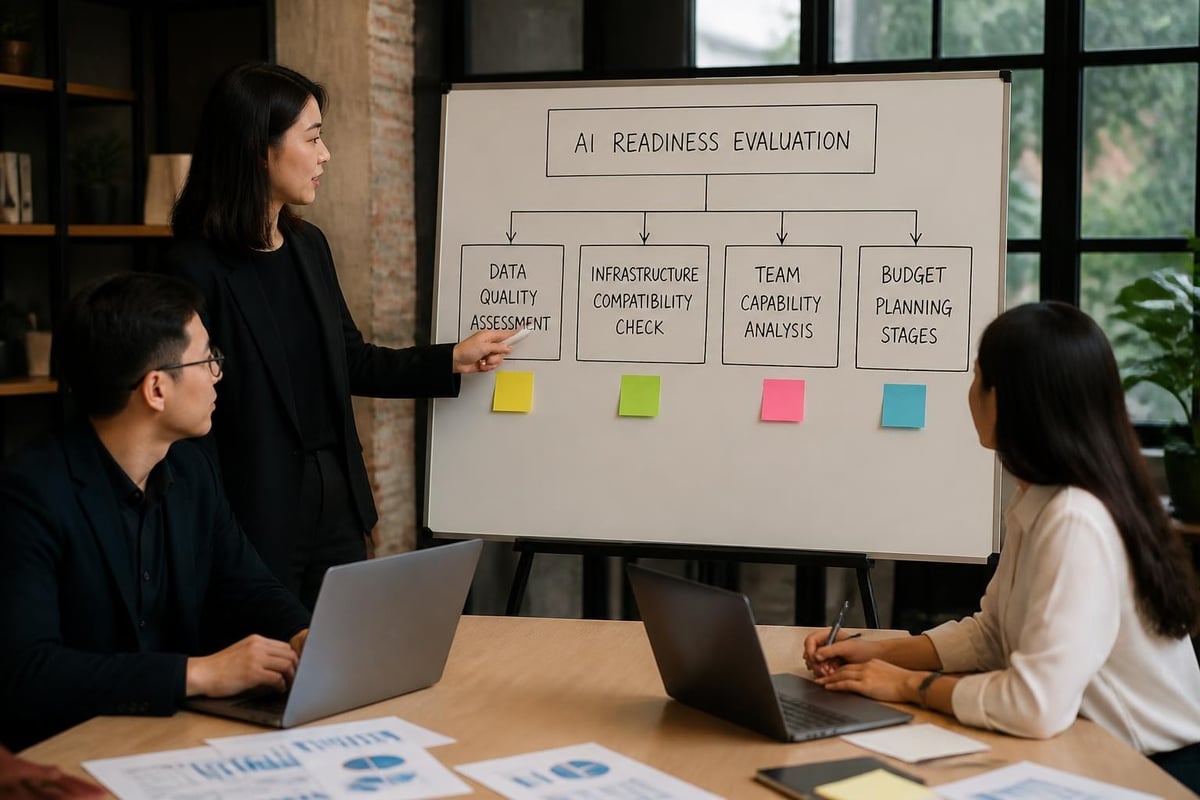
Start AI implementation by conducting an honest assessment of your current infrastructure and capabilities. Consider these critical factors:
- Data availability and quality: Do you have sufficient data to train or deploy AI agents effectively?
- Technical infrastructure: Can your existing systems integrate with AI solutions?
- Team readiness: Are your employees prepared to work alongside AI agents?
- Budget allocation: Have you allocated resources for both implementation and ongoing operations?
Not every business needs custom-built AI solutions. Many organizations benefit from platforms like AI Textura that offer ready-to-deploy AI agents without requiring coding expertise or server management.
Identifying High-Impact Use Cases to Start AI
The most successful AI implementations begin with targeted use cases that deliver measurable value quickly. Rather than attempting to transform your entire operation overnight, focus on specific areas where AI can create immediate impact.
Customer-facing operations often provide the strongest returns when you start AI adoption. AI agents can handle customer inquiries across multiple channels, provide instant responses in over 90 languages, and escalate complex issues to human team members when necessary.
Prioritizing Implementation Areas
| Business Function | AI Impact Potential | Implementation Complexity | Time to Value |
|---|---|---|---|
| Customer Support | High | Low | 2-4 weeks |
| Sales Qualification | High | Medium | 4-6 weeks |
| HR Screening | Medium | Low | 3-5 weeks |
| Marketing Automation | High | Medium | 4-8 weeks |
| CRM Updates | Medium | Low | 1-3 weeks |
Sales operations represent another powerful starting point. AI agents can qualify leads, schedule meetings, and update CRM systems automatically, freeing your sales team to focus on relationship-building and closing deals.
Human resources departments benefit significantly when they start AI integration for initial candidate screening, interview scheduling, and answering common employee questions about policies and benefits.
Navigating the Technical Landscape When You Start AI
The technical ecosystem for AI implementation has evolved dramatically. In 2026, businesses have more options than ever, from building custom solutions to leveraging platforms designed specifically for business operations.
When evaluating technical approaches, consider whether you need specialized AI tools or comprehensive platforms. Comparing different AI solutions helps identify which approach aligns with your specific requirements and technical capabilities.
Platform Versus Custom Development
Platform-based solutions offer several advantages when you start AI:
- Immediate deployment without extensive development time
- Pre-built integrations with common business tools
- Ongoing updates and maintenance handled by the provider
- Scalability built into the infrastructure
- No need for specialized technical staff
Custom development may be necessary for highly specialized use cases, but most businesses find that modern AI platforms provide sufficient flexibility and capability for their needs.
The economic landscape for AI startups reflects both opportunity and challenge. AI startups continue to attract significant investment, yet face considerable economic pressures related to operational costs and profitability.
Building Your Implementation Roadmap to Start AI
A structured implementation plan transforms AI aspirations into operational reality. Your roadmap should outline specific milestones, resource requirements, and success metrics for each phase of deployment.
Phase one typically involves selecting your initial use case and platform. This phase requires cross-functional collaboration between IT, operations, and the specific department where you'll deploy AI first.
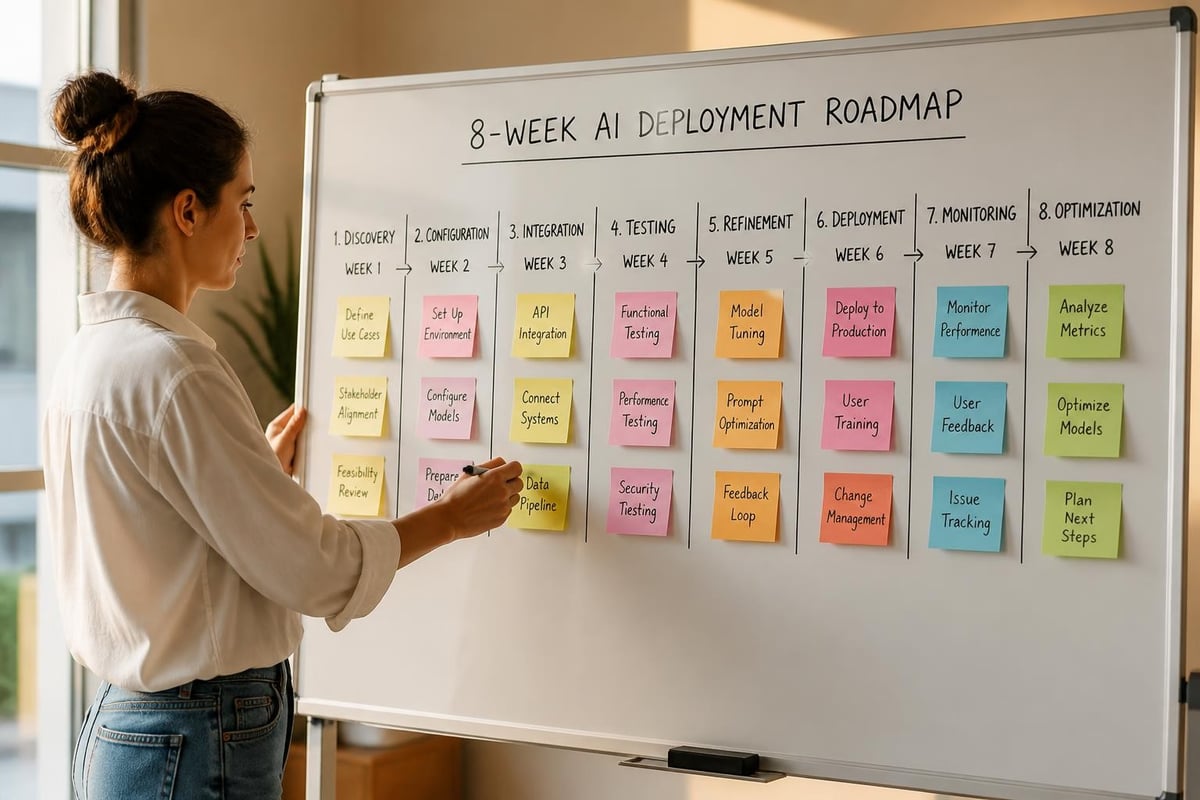
The Implementation Timeline
- Discovery and Planning (Week 1-2): Define objectives, identify use cases, select platform
- Configuration and Integration (Week 3-4): Set up AI agents, connect business systems, configure workflows
- Testing and Refinement (Week 5-6): Run pilot tests, gather feedback, adjust parameters
- Deployment and Monitoring (Week 7-8): Launch to production, establish monitoring protocols
- Optimization and Expansion (Week 9+): Analyze performance, refine approaches, identify additional use cases
Understanding how AI agents compare to hiring staff helps set realistic expectations and properly allocate resources between human and AI team members.
Overcoming Common Challenges as You Start AI
Every organization encounters obstacles during AI implementation. Anticipating these challenges and preparing mitigation strategies increases your likelihood of success.
Data privacy and security concerns rank among the top barriers. Ensure your chosen AI solution complies with relevant regulations and maintains robust security protocols. Platforms operating across multiple regions must handle data protection requirements for different jurisdictions.
Addressing Resistance and Building Buy-In
Employee concerns about AI replacing jobs can create resistance. Communicate clearly that AI agents handle repetitive tasks, allowing human employees to focus on higher-value activities requiring creativity, empathy, and complex problem-solving.
Technical integration challenges often arise when connecting AI agents to legacy systems. Modern platforms typically offer extensive integration capabilities, but planning for potential compatibility issues prevents delays.
| Challenge Type | Common Issues | Mitigation Strategies |
|---|---|---|
| Technical | Legacy system compatibility | Select platforms with extensive integration options |
| Cultural | Employee resistance | Transparent communication, training programs |
| Strategic | Unclear objectives | Define specific, measurable goals before implementation |
| Operational | Workflow disruption | Phased rollout, pilot programs |
Budget constraints may limit your initial scope when you start AI implementation. Focus on use cases with fastest time-to-value and clearest ROI to demonstrate success and justify expansion.
Measuring Success and Optimizing Performance
Establishing clear metrics before you start AI deployment enables objective assessment of impact and identifies optimization opportunities. Your measurement framework should track both operational efficiency gains and business outcome improvements.
Operational metrics include response times, task completion rates, error frequencies, and system uptime. These indicators reveal how well your AI agents perform their assigned functions.
Key Performance Indicators
Track these essential metrics across your AI implementation:
- First response time: How quickly AI agents engage with customers or tasks
- Resolution rate: Percentage of inquiries or tasks completed without human intervention
- Customer satisfaction scores: User feedback on AI interactions
- Cost per transaction: Operational expenses compared to previous methods
- Employee productivity gains: Time saved on automated tasks redirected to higher-value work
Business outcome metrics connect AI performance to broader organizational goals. These might include increased sales conversion rates, reduced customer churn, faster hiring cycles, or improved cash flow from automated billing processes.
Regular review cycles ensure your AI agents continue delivering value as your business evolves. Monthly performance reviews identify trends and optimization opportunities, while quarterly strategic assessments determine whether to expand AI into additional areas.
Scaling Your AI Operations Beyond Initial Implementation
Once your initial deployment proves successful, strategic expansion multiplies the value AI delivers to your organization. The approach you take to start AI in your first use case provides a blueprint for additional implementations.
Cross-functional expansion brings AI capabilities to multiple departments. A customer service AI agent might expand to handle sales inquiries, while HR automation extends from screening to onboarding support.
Horizontal scaling increases capacity within existing use cases. As customer volumes grow, AI agents handle increased interactions without proportional cost increases, providing significant operational leverage.
Building an AI-First Culture
Long-term AI success requires cultural transformation beyond technical implementation. Organizations that embrace AI as a fundamental operational capability gain competitive advantages over those treating it as a peripheral tool.
Encourage experimentation and learning throughout your organization. When employees understand AI capabilities and limitations, they identify valuable use cases and collaborate effectively with AI agents.
Invest in training programs that help team members understand how to work alongside AI agents. This includes knowing when to rely on AI automation and when human judgment provides superior outcomes.
Avoiding common startup mistakes becomes crucial as you expand AI operations. Focus on solving real business problems rather than implementing AI for its own sake.

Maintaining Competitive Advantage Through AI Innovation
The AI landscape evolves rapidly, and maintaining competitive advantage requires ongoing innovation and adaptation. Organizations that continuously refine their AI strategies stay ahead of competitors still working with manual processes.
Monitor emerging capabilities in AI platforms and assess their relevance to your operations. Features like multilingual support, advanced integration options, and enhanced automation capabilities can unlock new opportunities.
Continuous improvement distinguishes organizations that extract maximum value from AI investments. Regularly solicit feedback from employees working alongside AI agents and customers interacting with them. This input guides refinement and optimization efforts.
Strategic partnerships with AI platform providers ensure you benefit from their ongoing development efforts. Platforms committed to innovation deliver regular updates and new capabilities that expand what your AI agents can accomplish.
The decision to start AI implementation positions your organization for sustained success in an increasingly automated business environment. By approaching AI strategically, selecting appropriate use cases, and maintaining focus on business outcomes, you transform operational efficiency and competitive positioning.
Successfully implementing AI requires careful planning, strategic execution, and ongoing optimization across all phases of deployment. Whether you're looking to automate customer service, streamline sales operations, or enhance HR processes, the right platform makes all the difference. AI Textura provides ready-to-deploy AI agents that manage real business operations across sales, support, marketing, and HR-without requiring code or server management-enabling you to start AI implementation quickly and scale confidently as your needs evolve.