

Question answering AI has emerged as a transformative technology that enables businesses to automate information retrieval and customer interactions at unprecedented scale. This sophisticated form of artificial intelligence processes natural language queries and delivers precise, contextual responses by understanding both the question's intent and the underlying knowledge base. For businesses managing high volumes of customer inquiries, employee questions, or operational data requests, question answering AI represents a shift from reactive to proactive information management.
Understanding Question Answering AI Architecture
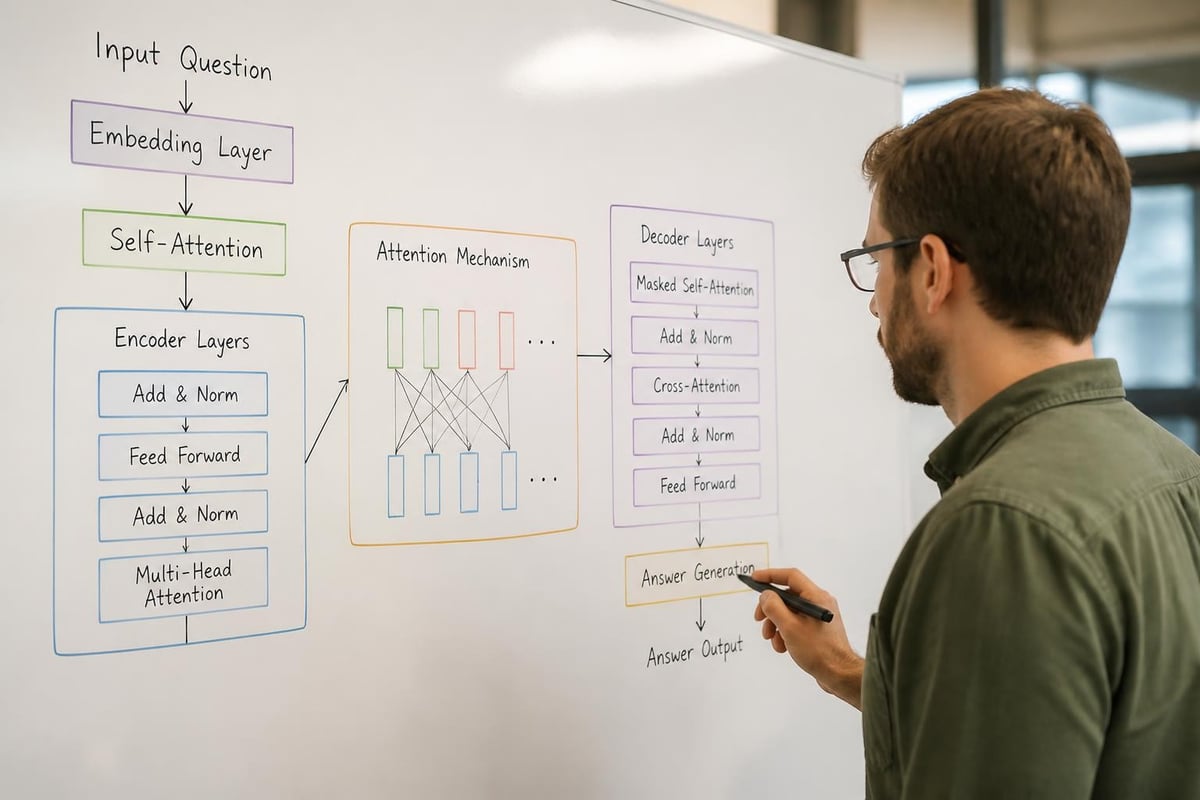
Question answering AI systems operate through multiple interconnected layers that process, analyze, and retrieve information. The architecture typically begins with natural language understanding, where the system parses incoming queries to identify entities, intent, and context. This initial processing stage determines how the question answering AI will approach finding the most relevant answer.
The retrieval mechanism forms the core of these systems. Modern question answering AI platforms utilize several approaches to locate answers:
- Extractive methods that pull exact passages from documents
- Generative approaches that synthesize new responses based on learned knowledge
- Hybrid systems combining both extractive and generative capabilities
- Knowledge graph integration for structured data retrieval
According to IBM's research on question answering systems, the evolution of these architectures has enabled more sophisticated understanding of complex queries. The processing pipeline also includes ranking algorithms that score potential answers based on relevance, confidence, and contextual appropriateness.
Neural Network Components
Deep learning models power contemporary question answering AI implementations. These neural networks have been trained on massive datasets containing millions of question-answer pairs, enabling them to recognize patterns in how questions are structured and how answers should be formulated.
Hugging Face's question answering models demonstrate the variety of specialized architectures available for different use cases. BERT-based models excel at reading comprehension tasks, while T5 and GPT variants handle more open-ended generation. The selection of the appropriate model depends on factors such as response time requirements, accuracy needs, and the nature of the knowledge base.
Business Applications Across Industries
Question answering AI has moved beyond simple chatbots to become an integral component of enterprise operations. Businesses now deploy these systems to handle complex workflows that previously required human intervention at every step.
Customer Support Automation
In customer service environments, question answering AI manages the majority of routine inquiries without human assistance. These systems connect to CRM databases, product catalogs, order histories, and knowledge bases to provide accurate, personalized responses. The technology processes questions in real-time, understands context from previous interactions, and escalates complex issues to human agents when necessary.
For businesses utilizing AI employees in their support operations, question answering AI handles tier-one support across multiple channels simultaneously. The system maintains conversation history, applies business rules, and even processes transactions like refunds or account updates based on the inquiry context.
| Application Area | Primary Function | Business Impact |
|---|---|---|
| Customer Support | Query resolution and ticket management | 60-80% reduction in response time |
| Sales Assistance | Product information and recommendation | 35-50% increase in conversion rates |
| HR Operations | Employee policy and benefits questions | 70% decrease in HR inquiry volume |
| Technical Documentation | Code and API reference queries | 45% faster developer onboarding |
Sales and Marketing Intelligence
Sales teams leverage question answering AI to access product specifications, pricing information, competitor comparisons, and customer histories during conversations with prospects. This immediate access to accurate information eliminates delays and improves closing rates.
Marketing departments use these systems to analyze campaign performance data, customer sentiment, and market research through natural language queries. Instead of building complex database queries or waiting for analyst reports, marketing managers can ask questions in plain language and receive data-driven answers instantly.
The integration of question answering AI with existing business systems creates a unified intelligence layer. When connected to platforms for AI and business operations, these systems pull data from multiple sources to construct comprehensive answers that would otherwise require manual data aggregation.
Implementation Strategies for Enterprise Deployment
Deploying question answering AI at enterprise scale requires careful planning around data architecture, model selection, and integration patterns. Organizations must evaluate their existing knowledge bases, identify gaps in documentation, and establish governance frameworks for AI-generated responses.
Knowledge Base Preparation
The quality of answers directly correlates with the quality and organization of the underlying knowledge base. Successful implementations begin with comprehensive data audits that identify:
- Existing documentation and its accessibility
- Gaps in current knowledge coverage
- Duplicate or conflicting information sources
- Outdated content requiring updates
Structured data formats improve question answering AI performance significantly. Converting unstructured documents into semantically tagged content enables more precise retrieval and better context understanding. Research on question answering with knowledge bases emphasizes the importance of well-organized information architectures.
Multi-Language Support Requirements
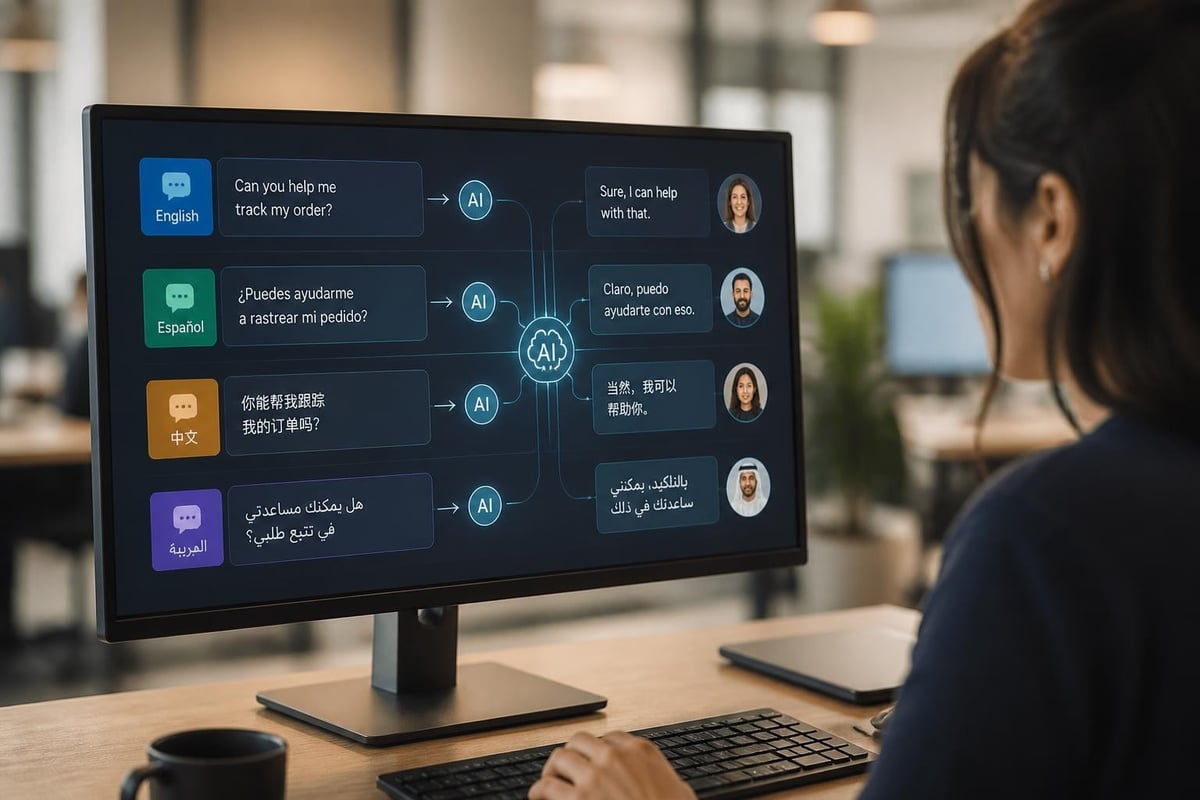
Global businesses require question answering AI systems that operate seamlessly across languages. Modern platforms process queries and deliver responses in over 90 languages, maintaining consistent accuracy and contextual understanding regardless of the input language.
The translation layer in these systems goes beyond simple word-for-word conversion. Advanced question answering AI preserves cultural context, industry-specific terminology, and regional business practices when generating responses for international audiences. This capability proves essential for multinational corporations managing customer interactions across diverse markets.
Advanced Capabilities and Reasoning
Modern question answering AI extends far beyond retrieving pre-written answers. These systems now perform complex reasoning tasks, synthesize information from multiple sources, and even identify when they lack sufficient information to provide accurate responses.
Multi-Hop Reasoning
Complex business questions often require connecting information across multiple documents or data sources. Multi-hop reasoning enables question answering AI to follow chains of logic through connected information. For example, answering "Which customers in the EMEA region purchased our premium tier after attending a webinar?" requires linking customer location data, purchase history, and event attendance records.
Microsoft's TIARA research demonstrates how multi-grained retrieval improves accuracy for questions requiring this type of complex information synthesis. The system breaks down compound questions into sub-queries, retrieves relevant information for each component, and assembles a coherent final answer.
Confidence Scoring and Uncertainty Handling
Enterprise-grade question answering AI includes confidence metrics for every response. When the system encounters ambiguous queries or lacks sufficient information, it communicates uncertainty rather than providing potentially incorrect answers. This transparency proves critical for business applications where inaccurate information could lead to compliance issues or customer dissatisfaction.
The confidence scoring mechanism evaluates multiple factors:
- Source reliability and recency
- Query clarity and specificity
- Answer completeness
- Consistency across multiple potential answers
- Historical accuracy for similar questions
Systems configured with appropriate confidence thresholds automatically escalate low-confidence queries to human experts while handling high-confidence requests autonomously.
Integration with Business Workflows
The true power of question answering AI emerges when integrated into existing business processes and systems. Rather than functioning as isolated tools, these AI systems become active participants in workflows, triggering actions based on the questions they answer.
CRM and Database Connectivity
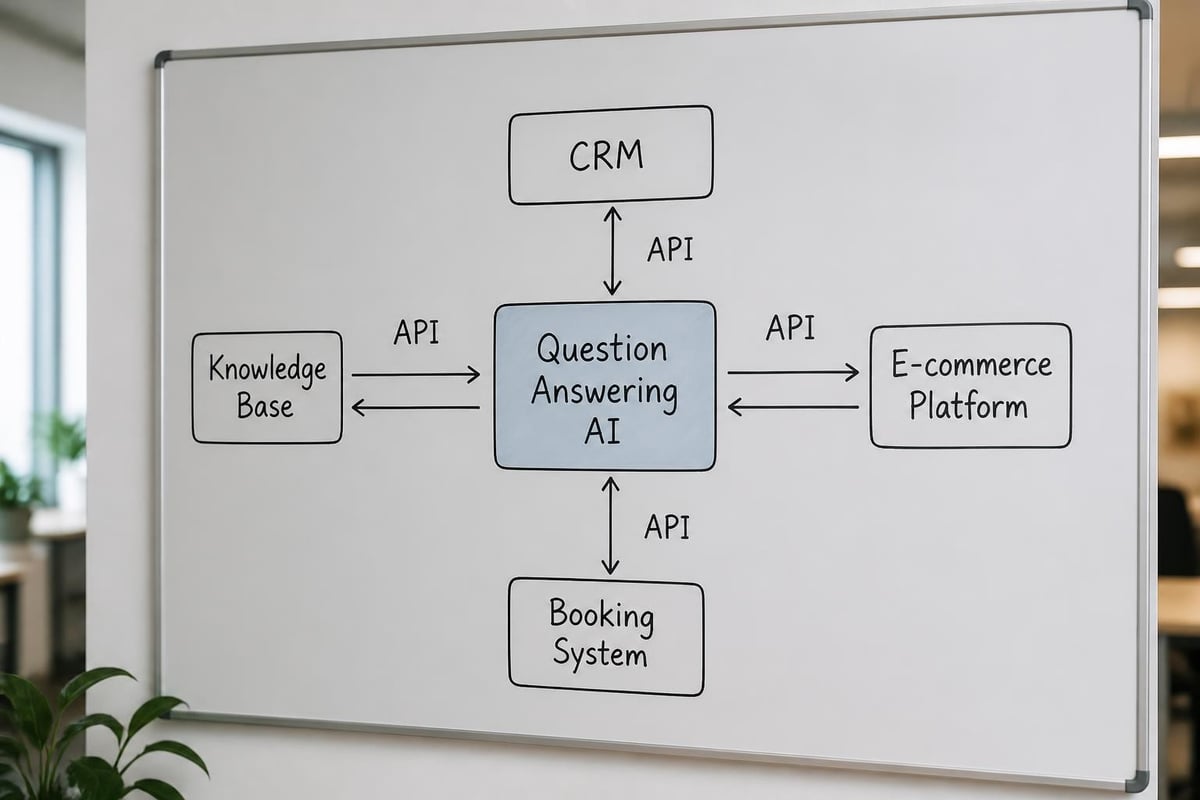
Question answering AI connects directly to customer relationship management systems, updating records based on conversation outcomes. When a customer asks about changing their subscription tier, the system not only provides pricing information but can also process the upgrade, update billing details, and schedule follow-up communications.
This action-oriented approach transforms question answering AI from an information retrieval tool into an operational agent. Businesses leveraging platforms that enable AI agents to take real actions experience measurable improvements in process efficiency and customer satisfaction scores.
| Integration Type | Capability | Business Value |
|---|---|---|
| CRM Systems | Update customer records, log interactions | Automated data entry and record keeping |
| E-commerce Platforms | Process orders, track shipments | Real-time transaction handling |
| HR Systems | Submit leave requests, update employee info | Self-service employee operations |
| Booking Systems | Schedule appointments, manage calendars | Automated reservation management |
API and Microservices Architecture
Modern question answering AI platforms expose APIs that allow seamless integration with proprietary business applications. This microservices approach enables organizations to embed question answering capabilities into existing interfaces without requiring complete system overhauls.
Development teams can leverage pre-built question answering AI models and customize them for specific industry vocabularies or business processes. The AI2 Reasoning Challenge has advanced research in this area, providing benchmarks that help organizations evaluate model performance for their specific requirements.
Performance Metrics and Optimization
Measuring the effectiveness of question answering AI requires tracking both technical performance and business outcomes. Organizations must establish baseline metrics before deployment and continuously monitor system performance against these benchmarks.
Technical Performance Indicators
Response accuracy represents the primary technical metric for question answering AI systems. This measurement compares system-generated answers against verified correct answers, typically expressed as an F1 score that balances precision and recall. Leading systems achieve accuracy rates exceeding 90% for domain-specific applications.
Latency metrics track how quickly the system generates responses. Business applications typically require sub-second response times to maintain natural conversation flow. Processing speed depends on factors including:
- Model complexity and size
- Knowledge base indexing efficiency
- Query preprocessing requirements
- Answer generation method (extractive versus generative)
Coverage metrics identify the percentage of user questions that the system can answer with high confidence. Low coverage indicates gaps in the knowledge base or limitations in the AI model's capabilities for specific question types.
Business Impact Measurements
The financial impact of question answering AI deployment manifests through multiple channels. Customer support cost reductions occur as the system handles increasing percentages of total inquiry volume. Organizations typically achieve 40-70% automation rates within six months of deployment.
Revenue impact appears in faster sales cycles and improved conversion rates. When sales teams access instant, accurate product information through question answering AI, they close deals more efficiently and handle higher volumes of prospects simultaneously.
Employee productivity gains emerge from reduced time spent searching for information. Knowledge workers report saving 5-10 hours weekly when question answering AI provides immediate access to company policies, procedures, and technical documentation.
Security and Compliance Considerations
Deploying question answering AI in enterprise environments requires robust security frameworks and compliance protocols. These systems access sensitive business information and interact with customers, creating multiple potential vulnerabilities that require careful management.
Data Privacy and Access Control
Question answering AI platforms must implement role-based access control to ensure users only receive answers based on information they are authorized to view. A customer service representative might access order histories and product specifications, while a sales manager requires additional access to revenue forecasts and competitive intelligence.
Data encryption protects information both in transit and at rest within question answering AI systems. End-to-end encryption ensures that customer queries, system responses, and underlying knowledge base content remain secure from unauthorized access.
Regulatory Compliance Requirements
Organizations operating in regulated industries must ensure their question answering AI systems comply with data protection regulations including GDPR, CCPA, and HIPAA. This compliance extends to how the system stores conversation histories, processes personally identifiable information, and handles data deletion requests.
Audit trails document every interaction with the question answering AI system, creating accountability and enabling compliance verification. These logs capture the questions asked, answers provided, data sources accessed, and any actions triggered by the system.
Future Developments in Question Answering AI
The question answering AI landscape continues evolving rapidly, with research advancing capabilities in reasoning, multimodal understanding, and domain specialization. Understanding these emerging trends helps businesses plan for future implementations and capabilities.
Multimodal Question Answering
Next-generation question answering AI will process questions about images, videos, and audio content alongside text-based queries. A customer might photograph a product defect and ask "What's wrong with this item?" The system would analyze the image, identify the issue, and provide troubleshooting guidance or warranty information.
This multimodal capability extends to analyzing complex documents containing charts, diagrams, and tables. Rather than relying solely on text extraction, advanced systems will interpret visual elements to answer questions about data trends, process flows, or technical specifications.
Domain-Specific Specialization
While general-purpose question answering AI handles broad knowledge across topics, specialized models trained on industry-specific datasets achieve superior performance for technical domains. Research frameworks like QASPER demonstrate how focused training on academic papers improves question answering for scientific and technical content.
Businesses benefit from deploying domain-tuned models that understand industry jargon, regulatory requirements, and specialized workflows. A hospitality-focused question answering AI comprehends booking terminology, room categories, and guest service protocols more accurately than general models.
Continuous Learning and Adaptation
Emerging question answering AI systems incorporate feedback loops that enable continuous improvement from user interactions. When users correct answers or indicate dissatisfaction, the system updates its knowledge and refines its response strategies for similar future questions.
This adaptive capability reduces the manual effort required to maintain question answering AI systems. Rather than requiring extensive retraining cycles, the systems evolve organically through usage, becoming more accurate and comprehensive over time.
Question answering AI represents a fundamental shift in how businesses handle information retrieval and customer interactions, transforming static knowledge bases into dynamic, conversational interfaces. The technology delivers measurable returns through reduced operational costs, improved customer satisfaction, and enhanced employee productivity across departments. AI Textura enables businesses to deploy intelligent AI agents that leverage advanced question answering capabilities to manage sales, support, marketing, and HR operations autonomously, operating in over 90 languages without requiring code or server management. Whether you're looking to automate customer support, streamline sales processes, or enhance employee self-service, AI Textura's platform provides the infrastructure to transform your business operations through intelligent question answering and automated action execution.