

The landscape of business operations has fundamentally shifted in 2026, with organizations increasingly turning to intelligent automation to maintain competitive advantages. The concept of perform AI has emerged as a critical framework for businesses seeking to deploy artificial intelligence that doesn't just analyze data but takes meaningful action across operations. Unlike traditional AI implementations that focus solely on insights or recommendations, perform AI systems actively execute tasks, make decisions, and deliver measurable business outcomes without requiring constant human oversight.
Understanding Perform AI in Modern Business Context
Perform AI represents a paradigm shift from passive artificial intelligence to active, results-driven automation. This approach encompasses AI systems designed to complete specific business functions end-to-end, from initial customer contact through transaction completion and follow-up activities.
The distinction between standard AI and perform AI lies in execution capability. Traditional AI might identify a sales opportunity or flag a customer service issue, while perform AI takes the next step by engaging the prospect, qualifying leads, scheduling appointments, or resolving support tickets autonomously. Capgemini's Perform AI services demonstrate how enterprises are leveraging augmented intelligence at scale to enhance business outcomes across multiple departments.
Key Characteristics of Perform AI Systems
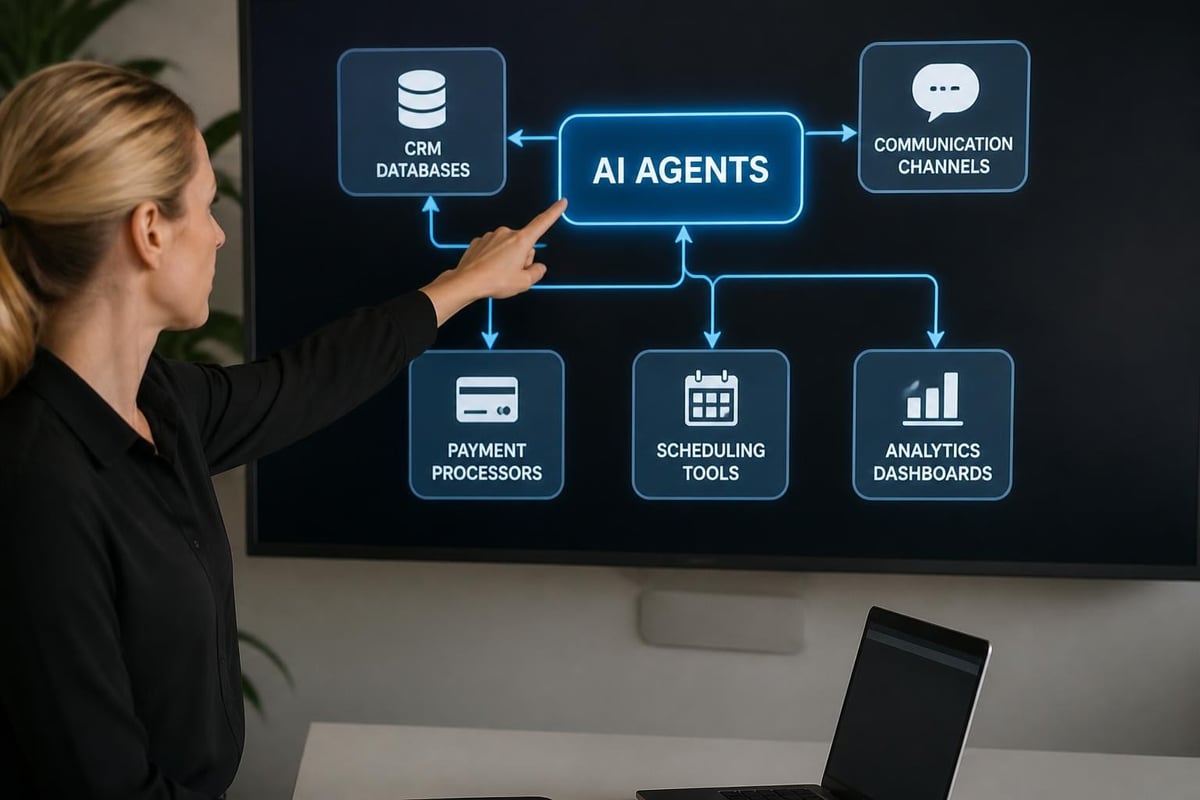
Action-oriented architecture forms the foundation of perform AI platforms. These systems integrate directly with business tools and databases, enabling them to create records, update information, send communications, and process transactions without API limitations or complex middleware.
- Real-time decision execution based on contextual understanding
- Multi-system coordination across CRM, communication, and operational platforms
- Autonomous workflow completion from initiation through resolution
- Adaptive learning from outcomes to improve future performance
- Cross-functional capability spanning sales, support, marketing, and administrative tasks
The performance metrics for these systems differ significantly from conventional AI. Rather than measuring accuracy percentages or processing speed alone, businesses evaluate perform AI based on completed transactions, resolved issues, qualified leads generated, and revenue impact.

Industry Applications Driving Perform AI Adoption
Different sectors have embraced perform AI technology to address specific operational challenges, creating measurable improvements in efficiency and customer satisfaction. The hospitality industry exemplifies this transformation, where AI agents handle reservation management, guest communications in multiple languages, special request processing, and upselling opportunities around the clock.
E-commerce businesses deploy perform AI to manage customer inquiries, process returns, provide product recommendations, and coordinate with inventory systems. A single AI agent can simultaneously handle hundreds of customer conversations, accessing order histories, checking product availability, and processing exchanges while maintaining consistent brand voice and service quality.
| Industry | Primary Use Cases | Measured Impact |
|---|---|---|
| Hospitality | Reservations, guest services, concierge | 40-60% reduction in response time |
| E-commerce | Customer support, order processing, recommendations | 35-50% increase in resolution rate |
| Professional Services | Appointment scheduling, client intake, follow-up | 50-70% admin time savings |
| Healthcare | Patient scheduling, insurance verification, reminders | 45-55% reduction in no-shows |
The flexibility of perform AI platforms allows businesses to deploy agents across departments without maintaining separate specialized systems. When comparing AI agents versus traditional hiring approaches, organizations discover significant advantages in scalability, consistency, and operational costs.
Technical Infrastructure Behind Effective Perform AI
The architecture supporting perform AI differs fundamentally from standard chatbot or automation platforms. These systems require sophisticated natural language understanding, integration capabilities, decision-making frameworks, and security protocols that enable autonomous operation across business-critical functions.
Integration and Interoperability
Modern perform AI platforms connect seamlessly with existing business infrastructure through native integrations and API frameworks. This connectivity enables AI agents to access customer data, update records, trigger workflows in other systems, and maintain synchronized information across the technology stack.
The most effective implementations operate without requiring extensive technical resources. Businesses can deploy and configure AI agents through visual interfaces, defining workflows, decision trees, and action parameters without coding knowledge. This accessibility democratizes AI adoption, allowing companies of all sizes to benefit from intelligent automation.
Security and compliance considerations remain paramount when deploying perform AI systems. Agents handling customer information, processing transactions, or accessing sensitive business data must operate within strict security protocols, maintaining encryption, access controls, audit trails, and compliance with industry regulations.
Organizations evaluating perform AI platforms should assess several technical capabilities:
- Multi-channel operation across web, messaging apps, email, and voice
- Language support for international customer bases and diverse markets
- Context preservation throughout extended customer interactions
- Handoff protocols for seamless transition to human agents when needed
- Analytics and reporting for performance monitoring and optimization
Research into AI deployment ethics and accountability highlights the importance of transparent operation and measurable performance standards, particularly as businesses grant AI agents increasing autonomy over customer-facing functions.
Implementing Perform AI for Maximum Business Impact
Successful perform AI deployment requires strategic planning beyond simple technology installation. Organizations must identify high-impact use cases, define success metrics, establish governance frameworks, and create processes for continuous improvement based on performance data.
Identifying Optimal Starting Points
The most successful implementations begin with high-volume, repetitive tasks that follow predictable patterns. Customer support inquiries, appointment scheduling, lead qualification, and basic transaction processing represent ideal initial use cases for perform AI deployment.
Businesses should evaluate potential applications based on three criteria: transaction volume (sufficient interactions to justify automation), process standardization (clear rules and decision paths), and business impact (measurable effect on revenue, costs, or customer satisfaction).
Starting with contained, well-defined processes allows organizations to demonstrate value quickly while building confidence in AI capabilities. As teams observe perform AI handling routine tasks effectively, they become more comfortable expanding agent responsibilities to complex scenarios requiring nuanced judgment.
Configuration and Optimization Strategies
Perform AI platforms provide flexibility in agent behavior, knowledge bases, and decision-making parameters. Organizations should invest time in comprehensive configuration that reflects brand voice, business policies, and customer service standards.
- Knowledge base development incorporating product information, policies, FAQs, and troubleshooting guides
- Conversation flow design that balances efficiency with customer experience
- Escalation criteria defining when AI agents transfer to human representatives
- Performance thresholds establishing acceptable response times and resolution rates
- Continuous training using interaction data to refine understanding and responses
Platforms like AI Textura enable businesses to configure AI agents without technical expertise, using intuitive interfaces to define agent capabilities, integrate business systems, and establish operational parameters aligned with organizational objectives.
The comparison between different AI workforce solutions reveals significant variations in capability, ease of implementation, and business impact, making careful platform selection essential for long-term success.
Measuring and Maximizing Perform AI Effectiveness
Performance measurement frameworks for AI agents extend beyond traditional automation metrics to encompass business outcomes, customer satisfaction, and operational efficiency gains. Organizations deploying perform AI should establish comprehensive monitoring that captures both quantitative performance data and qualitative impact on customer experience.
Essential Performance Indicators
Operational metrics provide baseline understanding of AI agent activity and efficiency. These measurements include conversation volume, average handling time, resolution rate without escalation, and system uptime. Tracking these indicators reveals whether perform AI systems operate reliably at required scale.
Business outcome metrics connect AI performance directly to organizational objectives. Revenue generated through AI-managed sales processes, cost savings from automated operations, customer lifetime value for AI-served accounts, and net promoter scores from automated interactions demonstrate tangible business impact.
| Metric Category | Key Indicators | Target Benchmarks |
|---|---|---|
| Efficiency | Avg. resolution time, concurrent conversations | 60-80% faster than human baseline |
| Quality | Customer satisfaction, first-contact resolution | 85-95% satisfaction rates |
| Business Impact | Revenue per conversation, cost per interaction | 50-70% cost reduction |
| Scalability | Peak volume handling, response time consistency | No degradation up to 10x volume |
Different applications of perform AI may emphasize different metrics. Sales-focused agents prioritize conversion rates and average transaction value, while support agents emphasize resolution rates and customer satisfaction scores. Performance-based AI platforms in marketing contexts demonstrate how outcome-focused measurement drives continuous optimization.
Continuous Improvement Methodologies
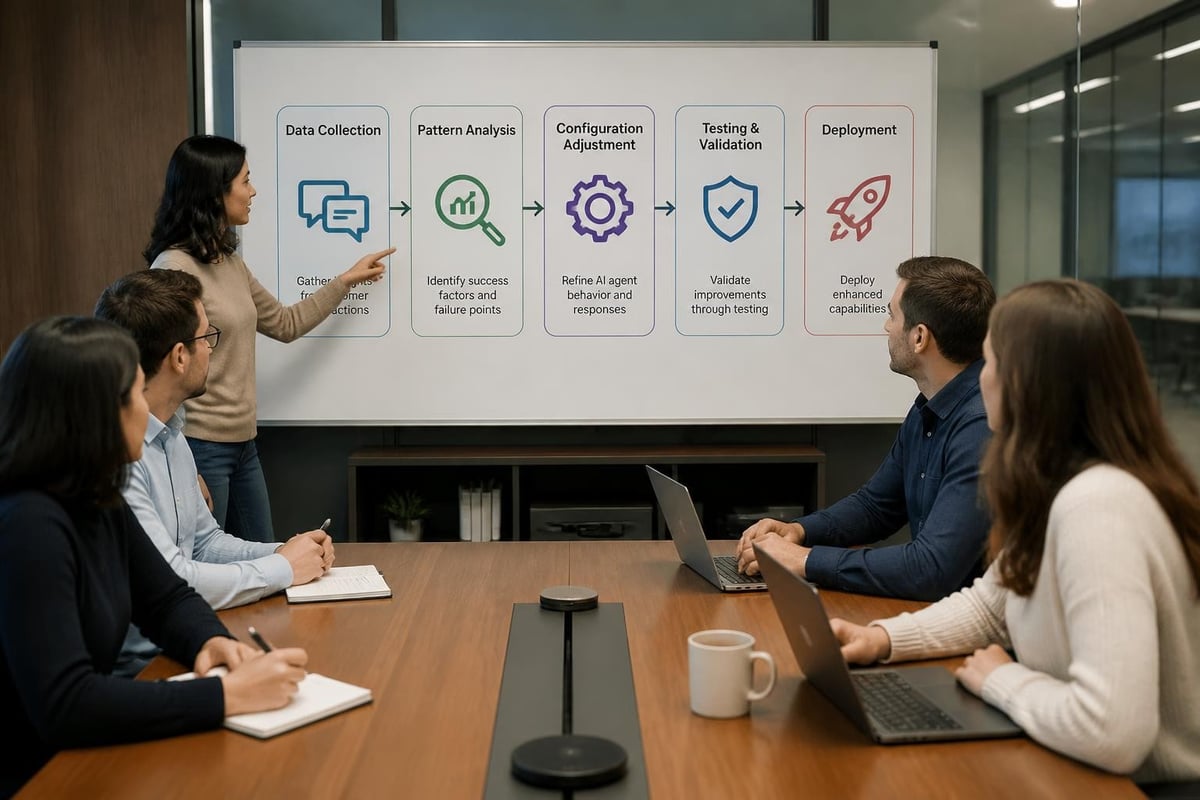
Perform AI systems improve through systematic analysis of interaction data, outcome patterns, and edge cases that reveal opportunities for enhanced capability. Organizations should establish regular review cycles examining failed interactions, escalated conversations, and negative feedback to identify knowledge gaps or decision-making limitations.
Advanced perform AI platforms incorporate machine learning that automatically refines understanding based on successful interaction patterns. However, human oversight remains essential for validating improvements, adjusting strategic direction, and ensuring AI behavior aligns with evolving business priorities.
Testing new capabilities in controlled environments before full deployment minimizes risk while enabling innovation. A/B testing different conversation approaches, response strategies, or decision criteria provides data-driven insights into optimal configuration for specific business contexts.
Competitive Advantages Through Strategic Perform AI Deployment
Organizations implementing perform AI effectively create sustainable competitive advantages that extend beyond immediate operational improvements. These benefits compound over time as AI agents accumulate knowledge, refine capabilities, and expand their operational scope.
Scalability Without Proportional Cost Increases
Traditional business growth requires proportional increases in workforce to handle expanded customer volumes, additional markets, or extended service hours. Perform AI breaks this constraint by enabling virtually unlimited scaling of customer interactions, sales processes, and support functions without corresponding cost escalation.
A business serving 1,000 customers monthly with human staff faces significant hiring, training, and management costs when expanding to 10,000 customers. The same business using perform AI can scale instantly, handling 10x or 100x volume with minimal incremental cost. This economic model transforms growth strategies and market expansion possibilities.
Consistency and reliability represent another critical advantage. Human performance varies based on training, experience, mood, and fatigue. Perform AI maintains consistent quality across every interaction, applying the same knowledge, policies, and decision-making frameworks regardless of volume, time of day, or individual circumstances.
Organizations leveraging perform AI gain flexibility in market approach and service delivery that traditional competitors cannot match. The ability to offer 24/7 service in 90+ languages, respond instantly to all inquiries, and maintain perfect policy compliance creates differentiation that customers notice and value.
Data Intelligence and Strategic Insights
Every interaction handled by perform AI generates structured data revealing customer preferences, common issues, successful resolution approaches, and market trends. This information accumulates into strategic intelligence that informs product development, service improvements, and business strategy.
Unlike human-managed interactions where knowledge remains distributed across individuals or captured inconsistently in notes, perform AI creates comprehensive, searchable records of every conversation, decision point, and outcome. Analysis of this data reveals patterns invisible in traditional operations, enabling proactive rather than reactive business management.
Research into AI applications in clinical settings demonstrates how predictive capabilities emerge from comprehensive interaction data, principles that apply equally to business contexts where perform AI can anticipate customer needs and optimize engagement strategies.
Future Trajectory of Perform AI Technology
The evolution of perform AI continues accelerating in 2026, with emerging capabilities expanding the scope and sophistication of autonomous business operations. Understanding these trajectories helps organizations position themselves strategically for long-term competitive advantage.
Enhanced Contextual Understanding
Current perform AI systems excel at structured tasks with clear parameters and decision criteria. Emerging capabilities enable more nuanced understanding of context, intent, and sentiment, allowing AI agents to handle increasingly complex scenarios that previously required human judgment.
Natural language processing advances allow perform AI to understand implicit customer needs, recognize emotional states, and adapt communication styles dynamically. These improvements expand the range of interactions AI can manage effectively while maintaining high customer satisfaction.
Multi-modal capabilities represent another frontier, with perform AI beginning to process images, documents, and voice alongside text. A customer photographing a damaged product or describing an issue verbally receives the same sophisticated analysis and resolution as someone typing detailed explanations.
Autonomous Decision-Making Expansion
The boundary between AI assistance and AI autonomy continues shifting as systems prove reliable in handling significant business decisions. Organizations increasingly trust perform AI with pricing decisions, customization options, exception handling, and strategic recommendations that directly impact business outcomes.
This expansion requires robust governance frameworks ensuring AI decisions align with business values, regulatory requirements, and risk tolerance. The most advanced implementations include continuous monitoring, random auditing, and clear escalation protocols that maintain appropriate human oversight while maximizing AI autonomy.
Analysis of industry AI research trends reveals accelerating investment in autonomous business systems, indicating that perform AI capabilities will expand significantly over the next several years, creating advantages for early adopters who build expertise and infrastructure now.
Integration Strategies for Multi-Department Operations
While initial perform AI deployments often focus on single departments or functions, maximum value emerges when AI agents operate across organizational boundaries, coordinating activities and maintaining context across the customer journey.
Cross-Functional Agent Coordination
A customer inquiry about a delayed order might require coordination between sales, logistics, and customer service functions. Traditional organizational structures create handoffs, delays, and potential information loss at each transition. Perform AI can maintain context and coordinate across these boundaries seamlessly.
Advanced implementations deploy specialized AI agents for different functions (sales, support, scheduling, billing) that share information and coordinate activities automatically. A support agent identifying an upsell opportunity can seamlessly transition the customer to a sales agent while transferring complete interaction history and context.
This coordination extends to back-office operations where perform AI manages data entry, system updates, report generation, and workflow triggering across multiple platforms. The result is truly integrated operations where customer-facing and internal processes work in harmony without manual coordination overhead.
Businesses implementing comprehensive AI agent strategies should explore platforms offering unified agent management that simplifies coordination across functions while maintaining specialized capabilities for different operational requirements.
Perform AI represents a fundamental evolution in how businesses operate, moving beyond automation of individual tasks toward comprehensive, intelligent management of entire business functions. Organizations that strategically deploy these capabilities in 2026 position themselves for sustainable competitive advantages through superior scalability, consistency, and customer experience. AI Textura provides the platform businesses need to realize these benefits, offering code-free AI agent deployment that handles sales, support, marketing, and HR operations across 90+ languages, enabling companies to transform operations without technical complexity or infrastructure investment.