

The landscape of business operations has fundamentally shifted as organizations recognize that an ai team is no longer a luxury reserved for tech giants, but a strategic necessity for companies of all sizes. Whether you're managing customer support, sales operations, or marketing campaigns, assembling and orchestrating the right combination of AI agents and human expertise determines your competitive advantage in an increasingly automated marketplace. The challenge lies not just in adopting AI technology, but in structuring these intelligent systems to work cohesively toward business objectives while maintaining quality and reliability at scale.
Understanding the Modern AI Team Framework
An ai team in 2026 represents a hybrid organizational structure where AI agents handle repetitive, data-intensive tasks while human team members focus on strategic decision-making, creative problem-solving, and relationship management. This partnership creates operational efficiency that neither humans nor AI could achieve independently.
The fundamental components of a successful ai team include autonomous agents capable of executing specific business functions, oversight mechanisms to ensure quality and compliance, integration pathways connecting agents to existing business systems, and human managers who define objectives and handle exceptions. Organizations implementing AI management strategies for data-driven teams report significant improvements in both operational speed and accuracy.
Key Roles Within an AI Team Structure
Modern ai team configurations require clearly defined responsibilities distributed across both human and AI participants. The structure typically includes:
- AI Agent Specialists: Configure and train agents for specific business functions
- Orchestration Managers: Oversee multi-agent workflows and handoffs
- Quality Assurance Leads: Monitor agent performance and output quality
- Integration Engineers: Connect AI systems with existing business tools
- Strategy Directors: Align AI capabilities with business objectives

Each role serves a distinct purpose in maintaining the balance between automation and human judgment. Organizations that implement AI Textura's platform find that clear role definition accelerates adoption and reduces implementation friction.
Building Your AI Team from the Ground Up
Starting with a clear assessment of business needs prevents the common pitfall of implementing AI for technology's sake rather than solving actual operational challenges. Identify the specific pain points where an ai team would deliver measurable value, whether that's handling after-hours customer inquiries, qualifying sales leads, or managing appointment scheduling.
| Build Approach | Timeline | Cost | Flexibility | Best For |
|---|---|---|---|---|
| In-house development | 6-12 months | High | Maximum | Large enterprises with technical resources |
| Platform-based deployment | 1-4 weeks | Moderate | High | SMBs and scaling businesses |
| Hybrid model | 2-6 months | Variable | Moderate | Organizations with specific custom needs |
Selecting the Right AI Agents for Your Operations
The process of choosing AI agents for your team mirrors traditional hiring, requiring careful evaluation of capabilities against job requirements. Consider these essential factors when building your ai team roster:
- Functional specialization: Match agent capabilities to specific business processes
- Integration compatibility: Ensure agents work with your existing technology stack
- Language support: Verify coverage for your target markets and customer base
- Scalability limits: Understand performance boundaries before reaching capacity
- Learning capabilities: Evaluate how agents improve through interaction data
Businesses in hospitality and e-commerce particularly benefit from agents that handle multilingual communication, as detailed in AI Textura's integration capabilities. The ability to serve customers across 90+ languages without hiring multilingual staff represents significant cost savings and market expansion potential.
Managing and Orchestrating AI Agent Teams
Once deployed, an ai team requires active management to maintain performance standards and adapt to changing business conditions. The orchestration layer coordinates multiple agents working on interconnected tasks, ensuring smooth handoffs and preventing conflicts or redundant actions.
Effective orchestration involves defining clear protocols for agent-to-agent communication, establishing escalation pathways when agents encounter situations beyond their capabilities, monitoring real-time performance metrics, and implementing version control for agent configurations. Organizations implementing best practices for leading and managing agentic teams report fewer operational disruptions and faster time-to-value.
Governance and Quality Control
Strong governance frameworks separate high-performing ai team implementations from problematic deployments. Quality control mechanisms should include:
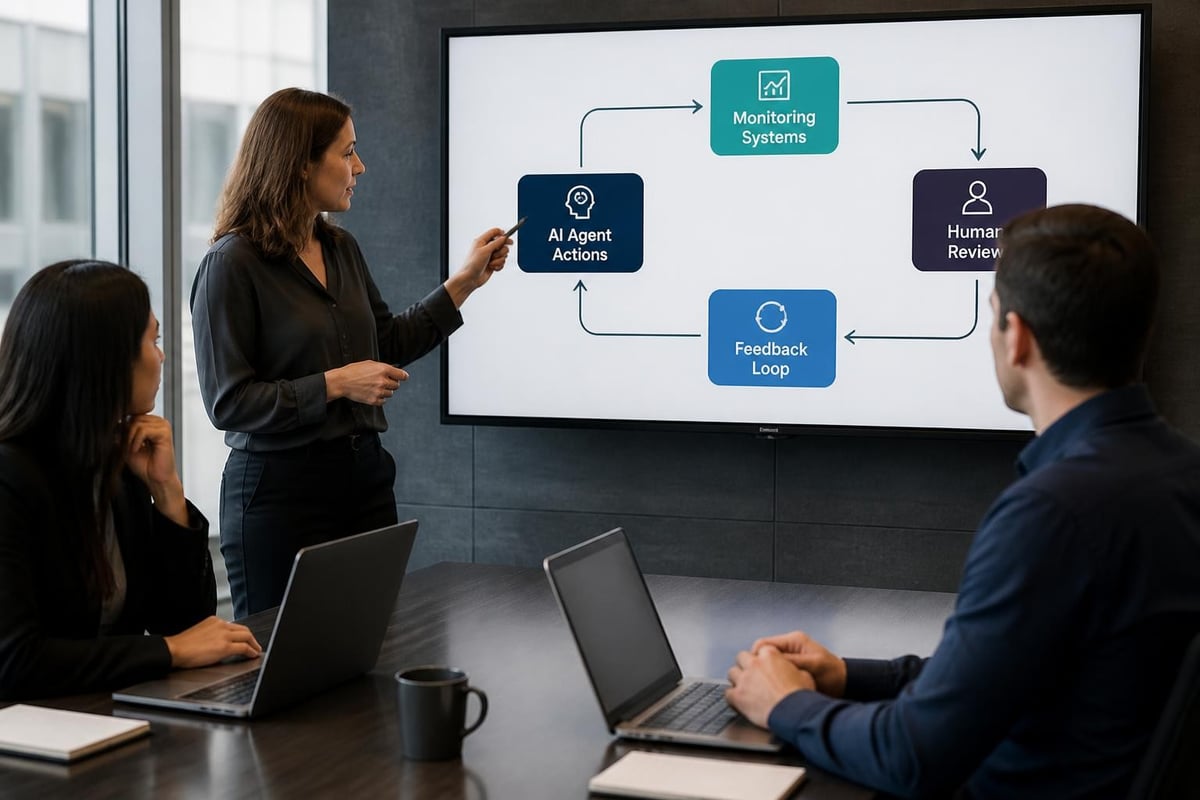
Automated monitoring systems track key performance indicators such as response accuracy, task completion rates, and customer satisfaction scores. These systems flag anomalies for human review before they impact business outcomes.
Regular audit cycles examine agent decisions against business rules and compliance requirements. This proves especially critical in regulated industries where AI actions carry legal implications.
Feedback loops channel customer responses and human observations back into agent training processes, creating continuous improvement cycles that enhance performance over time.
The platform documentation provides detailed guidance on implementing effective monitoring and control mechanisms that maintain quality without creating administrative burden.
Scaling Your AI Team as Business Grows
Growth presents unique challenges for ai team management, as increasing volume can expose limitations in architecture, coordination, or resource allocation. Planning for scale from initial deployment prevents costly restructuring later.
Consider the scaling dimensions that affect ai team performance:
- Volume capacity: Number of simultaneous conversations or tasks agents can handle
- Functional breadth: Range of different processes covered by your agent roster
- Geographic expansion: Markets and time zones your team serves
- Integration depth: Complexity of systems your agents access and update
- Decision complexity: Sophistication of judgments agents make independently
Organizations successfully building AI agents that don't break at scale invest in robust infrastructure and clear operational protocols before experiencing performance issues.
Measuring AI Team Performance
Quantifying ai team effectiveness requires metrics that capture both operational efficiency and business impact. Traditional KPIs apply alongside AI-specific measurements:
| Metric Category | Key Indicators | Target Benchmark |
|---|---|---|
| Efficiency | Response time, resolution rate, task throughput | 80%+ automation rate |
| Quality | Accuracy score, customer satisfaction, error rate | <5% error threshold |
| Business Impact | Cost per interaction, revenue influence, conversion rate | 40%+ cost reduction |
| Learning Velocity | Improvement rate, adaptation speed, coverage expansion | 10%+ monthly gains |
The most successful implementations connect ai team metrics directly to business outcomes rather than focusing solely on technical performance. This alignment ensures continued executive support and resource allocation.
Training and Collaboration Between Humans and AI
Building an effective ai team extends beyond technical configuration to include cultural adaptation and skill development within your human workforce. Employees need training not just in using AI tools, but in collaborating with AI colleagues as true team members.
Successful human-machine collaboration requires several foundational elements. First, clear communication protocols establish how humans and AI agents exchange information and coordinate actions. Second, defined escalation procedures specify when agents should seek human assistance. Third, shared objectives align both human and AI efforts toward common business goals.
Developing AI Team Expertise
Organizations building internal ai team management capabilities should focus on developing these core competencies:
Agent configuration skills enable team members to adjust AI behavior, refine decision logic, and expand agent capabilities without requiring engineering resources. These skills prove particularly valuable when business requirements change or new use cases emerge.
Performance analysis capabilities help managers identify optimization opportunities, diagnose issues, and measure ROI from AI investments. Understanding which metrics matter and how to interpret them drives better decision-making.
Strategic planning abilities ensure ai team expansion aligns with broader business objectives rather than growing based solely on technical possibilities. This perspective prevents overinvestment in impressive but non-essential capabilities.
Resources like AI Textura's knowledge base provide structured learning paths that accelerate competency development across these critical areas.
Integration Architecture for AI Teams
Technical integration represents a critical success factor for ai team implementations, as agents deliver value by connecting disparate business systems and automating cross-platform workflows. Poor integration limits agents to isolated tasks rather than enabling sophisticated multi-step processes.
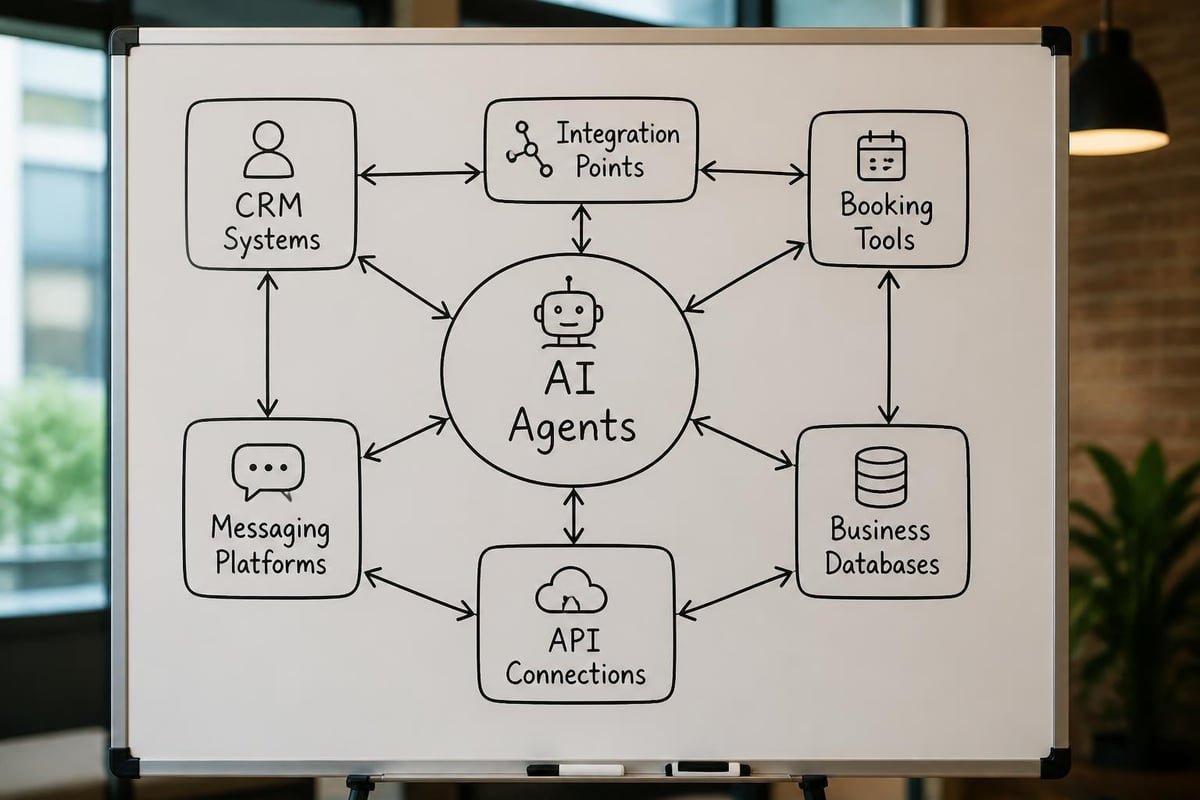
Effective integration architecture addresses several key dimensions:
- Data access: Agents need read permissions for information required to make decisions
- Action capabilities: Agents require write access to update systems based on outcomes
- Security boundaries: Integration must respect data protection and access control rules
- Error handling: Systems need graceful degradation when services become unavailable
- Audit trails: All agent actions require logging for compliance and troubleshooting
The messenger channel integrations demonstrate how modern platforms enable agents to operate across multiple communication channels while maintaining context and consistency.
Platform Selection Considerations
Choosing the right foundation for your ai team significantly impacts implementation speed, ongoing maintenance requirements, and scaling capabilities. Platform selection criteria should include:
Deployment flexibility determines whether you can host agents in your preferred environment, whether cloud-based, on-premises, or hybrid configurations. This affects both security posture and operational costs.
No-code configuration enables business users to adjust agent behavior without requiring developer intervention, accelerating iteration cycles and reducing bottlenecks.
Built-in integrations with common business tools eliminate custom development work and reduce time-to-value for standard use cases.
Multi-language support proves essential for organizations serving global markets or operating in multilingual regions.
Platforms offering these capabilities, such as those detailed in AI Textura's case studies, significantly reduce implementation complexity while maintaining enterprise-grade functionality.
Advanced AI Team Capabilities
As organizations mature their ai team implementations, advanced capabilities unlock additional value and competitive advantages. These sophisticated features build on foundational deployments to address complex business scenarios.
Multi-agent orchestration coordinates teams of specialized agents working on interconnected tasks, similar to how human departments collaborate on customer journeys. A sales agent might hand off to a technical support agent after closing a deal, ensuring seamless customer experience.
Contextual memory enables agents to maintain conversation history and customer preferences across interactions, creating continuity that mirrors human relationship management.
Predictive actions allow agents to anticipate customer needs based on behavioral patterns, proactively offering solutions before customers articulate requests.
Dynamic learning continuously improves agent performance through interaction analysis, without requiring manual retraining or configuration updates.
Organizations implementing these advanced capabilities report significantly higher customer satisfaction and operational efficiency compared to basic automation implementations.
Industry-Specific AI Team Applications
Different sectors derive unique value from ai team deployments tailored to their specific operational patterns and customer expectations. Hospitality businesses leverage AI teams for reservation management, guest communication, and service coordination across multiple properties. E-commerce operations utilize agents for product recommendations, order tracking, and returns processing.
Professional services firms deploy ai team members for client intake, scheduling, and preliminary consultations. Healthcare organizations use agents for appointment management, patient communication, and administrative workflows.
The hotel-specific solutions illustrate how vertical specialization creates more effective implementations than generic approaches.
Future-Proofing Your AI Team Strategy
The rapid evolution of AI technology requires forward-thinking approaches that accommodate future capabilities while delivering immediate value. Organizations building ai team strategies for long-term success consider both current needs and anticipated developments.
Modular architecture allows individual agent replacement or upgrading without disrupting entire systems. This flexibility proves essential as AI capabilities advance and new models emerge.
Skills investment in your human team members ensures internal expertise keeps pace with technological evolution. Organizations dependent on external vendors for all AI knowledge face strategic vulnerability.
Experimentation frameworks create safe spaces for testing new capabilities before production deployment, balancing innovation with operational stability.
Staying informed about emerging trends through resources like AI Textura's changelog helps organizations identify valuable new capabilities worth exploring.
The most successful ai team implementations treat AI adoption as an ongoing journey rather than a one-time project, continuously evolving capabilities to match changing business needs and technological possibilities.
Building and managing an effective ai team transforms business operations by combining AI efficiency with human strategic judgment, creating capabilities that neither could achieve independently. AI Textura provides the platform infrastructure to deploy, manage, and scale AI agents across your business operations without requiring technical expertise or server management, enabling you to focus on strategy while your AI team handles execution. Whether you're starting with a single use case or orchestrating complex multi-agent workflows, the right approach to ai team development positions your organization for sustained competitive advantage in an increasingly automated business landscape.