

The landscape of information technology support has undergone a dramatic transformation as artificial intelligence reshapes how organizations deliver technical assistance to employees and customers. Modern ai it support systems combine natural language processing, machine learning, and automation to provide instant responses, predictive maintenance, and intelligent ticket routing that dramatically reduces resolution times. This shift represents more than simple automation; it fundamentally changes how IT departments operate, freeing skilled technicians from repetitive tasks while delivering faster, more consistent support experiences across every interaction.
The Evolution of IT Support Through Artificial Intelligence
Traditional help desk operations relied on human agents to manually process tickets, research solutions, and escalate complex issues through multiple tiers of support. This model created bottlenecks during peak demand periods and resulted in inconsistent service quality depending on individual agent knowledge and availability.
AI it support platforms have introduced a paradigm shift by handling routine inquiries autonomously while augmenting human capabilities for complex problems. According to IBM's analysis of AI transformation in IT support, organizations implementing virtual assistants and self-service tools report significant improvements in both efficiency and customer satisfaction metrics.
The technology leverages several core capabilities:
- Natural language understanding that interprets user questions across multiple languages and communication styles
- Knowledge base integration that retrieves relevant solutions from documentation, past tickets, and technical resources
- Automated ticket classification that routes issues to appropriate teams based on content analysis
- Predictive analytics that identify potential problems before users report them
- Continuous learning that improves response accuracy based on resolution outcomes
Key Components of Modern AI IT Support Systems
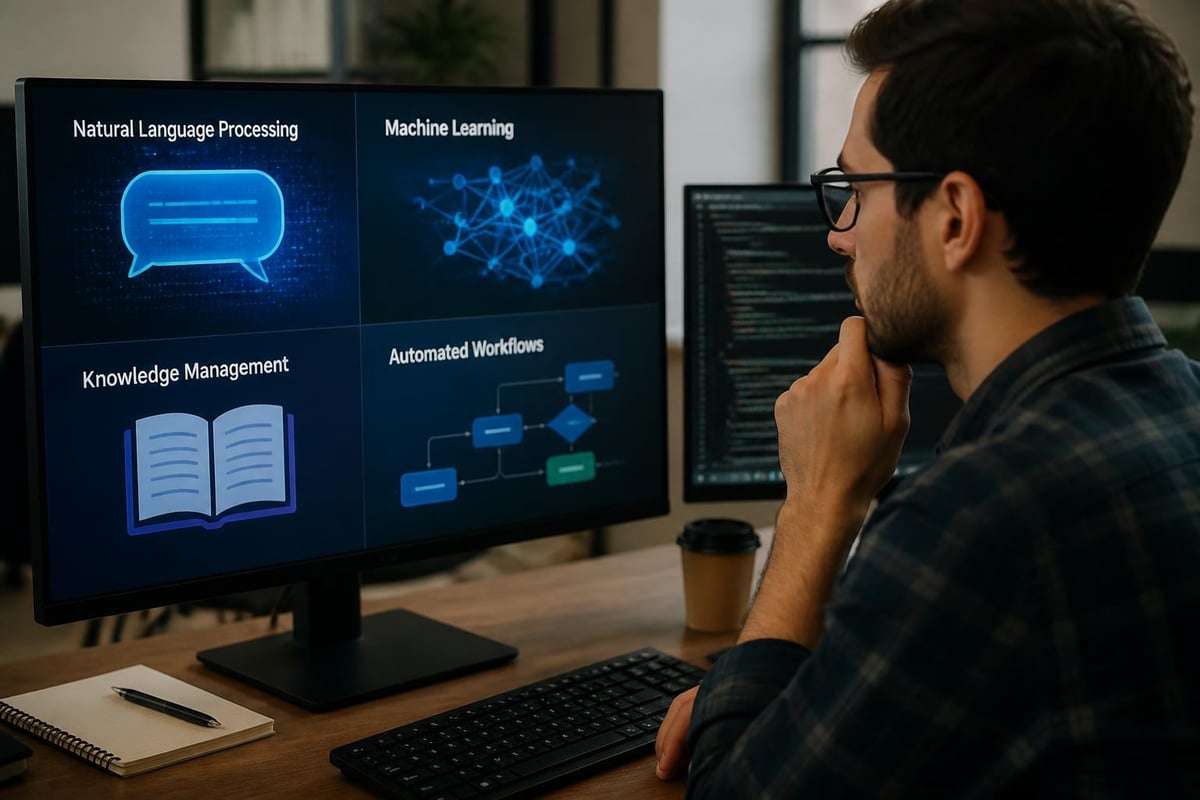
Modern implementations combine multiple specialized technologies working in concert. Machine learning algorithms analyze historical ticket data to identify patterns and predict resolution strategies. Natural language processing enables conversational interfaces that understand context and intent rather than requiring rigid keyword matching.
Intelligent routing engines examine incoming requests and automatically assign them to the most qualified resource, whether automated workflow, knowledge base article, or human specialist. This reduces the time tickets spend in queue and ensures complex issues reach experienced technicians immediately.
Practical Applications Transforming Service Delivery
Organizations deploy ai it support across numerous use cases that deliver measurable business value. Password reset requests, one of the most common IT tickets, can be handled entirely through automated verification and self-service portals, reducing what was once a 15-minute human interaction to a 90-second automated process.
Software provisioning represents another high-impact application. When employees need access to specific applications or resources, AI agents can verify permissions, check license availability, provision accounts, and send confirmation emails without human intervention. This accelerates onboarding timelines and eliminates administrative overhead.
The Console blog highlights how AI integration into IT support teams automates service desk activities while improving overall operational efficiency through intelligent process optimization.
Incident Management and Resolution
| Incident Type | Traditional Approach | AI IT Support Approach | Time Savings |
|---|---|---|---|
| Password Reset | Manual verification, 10-15 min | Automated identity check, 1-2 min | 85-90% |
| Software Access | Email approval chain, 2-3 days | Instant verification and provisioning | 95%+ |
| Network Issues | Tier 1 triage, escalation | Automated diagnostics, direct routing | 60-70% |
| Hardware Requests | Form submission, manual review | Intelligent approval workflows | 50-60% |
Predictive maintenance capabilities enable proactive support that prevents issues before they impact users. By monitoring system logs, performance metrics, and user behavior patterns, AI systems can detect anomalies indicating potential failures and trigger preventive actions automatically.
For businesses operating virtual assistant platforms, these capabilities extend beyond internal IT support to customer-facing technical assistance, creating seamless experiences across all touchpoints.
Implementation Strategies for Maximum Impact
Successful ai it support deployment requires careful planning that aligns technology capabilities with organizational needs and existing infrastructure. Organizations should begin by analyzing their current ticket volume to identify high-frequency, low-complexity issues suitable for automation.
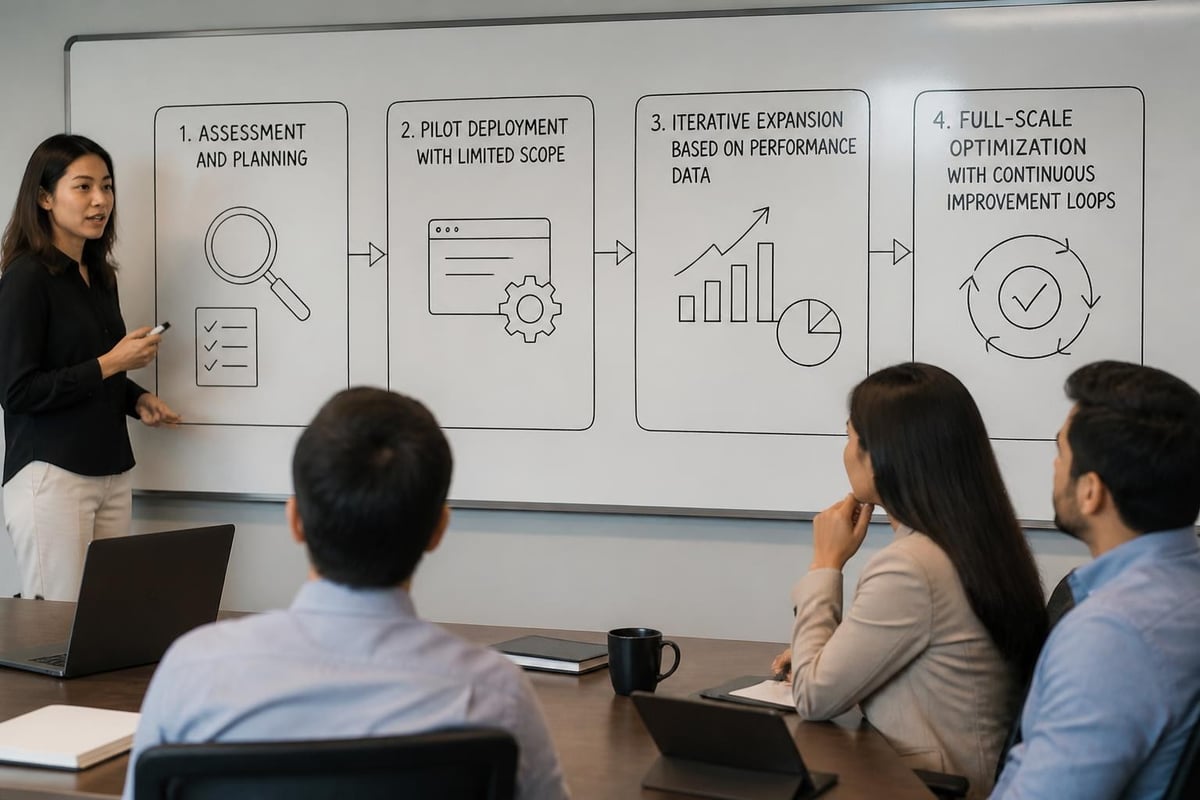
Phase 1: Foundation Building
Start with comprehensive documentation of existing processes, common issues, and resolution procedures. This knowledge base forms the training foundation for AI systems. Clean, structured data proves essential for effective machine learning, so invest time in organizing historical tickets and removing duplicates or errors.
Phase 2: Pilot Program
Deploy AI capabilities for a limited scope, typically handling one or two common request types. Monitor performance metrics including:
- First contact resolution rate
- Average handling time
- User satisfaction scores
- Escalation frequency
- Accuracy of automated responses
Phase 3: Iterative Expansion
Based on pilot results, gradually expand AI coverage to additional request categories. Continuously refine the system through feedback loops where human agents review AI responses and flag errors for retraining. This iterative approach builds confidence while minimizing disruption.
However, research on AI adoption rates reveals that enthusiasm often outpaces readiness, with many organizations struggling due to inadequate governance frameworks and technical preparation.
Integration With Existing Tools and Workflows
Modern ai it support platforms must connect seamlessly with your existing technology ecosystem. Integration with ticketing systems like ServiceNow, Jira Service Management, or Zendesk ensures AI agents can create, update, and resolve tickets automatically. Connection to identity management systems enables secure authentication and authorization for self-service actions.
Communication channel integration proves equally critical. Users expect support availability through their preferred platforms, whether email, chat, messaging apps, or voice. AI agents should maintain conversation context across channels, allowing users to start an inquiry via chat and follow up through email without repeating information.
For organizations comparing different approaches, understanding the differences between traditional solutions like Intercom and Zendesk versus AI-native platforms helps inform technology selection decisions.
Measuring Success and ROI
Quantifying the business impact of ai it support requires tracking both operational metrics and business outcomes. Organizations should establish baseline measurements before implementation to enable accurate comparison and demonstrate value to stakeholders.
Operational Metrics
Resolution efficiency metrics track how quickly issues are resolved. Compare average handling time for AI-resolved versus human-resolved tickets across different categories. Monitor first contact resolution rates, which typically improve significantly as AI systems handle straightforward requests completely.
Volume metrics reveal capacity gains. Measure the percentage of total tickets handled without human intervention and the reduction in queue depth during peak periods. Track escalation rates to ensure complex issues still reach qualified technicians promptly.
Quality metrics assess service consistency. User satisfaction scores, sentiment analysis of feedback, and reopened ticket rates indicate whether automated responses meet user needs. Regular quality audits where humans review AI interactions identify areas requiring improvement.
Business Outcomes
Beyond operational improvements, ai it support delivers tangible business benefits:
- Cost reduction through decreased labor requirements for routine tasks
- Faster onboarding as new employees receive instant support for common questions
- Increased productivity when technical issues are resolved in minutes rather than hours
- Extended coverage providing 24/7 support without additional staffing costs
- Better resource allocation allowing skilled technicians to focus on strategic projects
The Devzery blog outlines ten specific ways AI boosts IT support, including automation of routine tasks and predictive issue resolution that prevents downtime before it occurs.
Addressing Common Challenges and Concerns
Despite clear benefits, organizations encounter obstacles when implementing ai it support. Understanding these challenges and developing mitigation strategies increases the likelihood of successful deployment.
Data quality issues represent the most common technical challenge. AI systems require clean, well-structured historical data for effective training. Organizations with inconsistent ticket categorization, incomplete resolution notes, or fragmented knowledge bases must invest in data cleanup before deployment yields optimal results.
User resistance stems from concerns about job displacement and preference for human interaction. Address this through transparent communication about how AI augments rather than replaces human agents. Position the technology as a tool that handles repetitive work, allowing staff to engage in more satisfying, complex problem-solving.
Security and privacy considerations require careful attention, particularly when AI systems access sensitive corporate data or personal information. Implement robust access controls, audit logging, and data encryption. Ensure compliance with relevant regulations like GDPR or HIPAA depending on your industry.

Balancing Automation With Human Touch
The most effective ai it support strategies combine automated efficiency with human empathy. Design your system to recognize when users are frustrated or when issues exceed AI capabilities, seamlessly transferring to human agents with complete context. This hybrid approach delivers speed without sacrificing the personalized attention complex situations demand.
Monitor sentiment during interactions and program intelligent escalation triggers. If a user expresses frustration through language patterns, tone (in voice interactions), or repeated reformulations of their question, immediately connect them with a human agent who can provide empathetic assistance.
Organizations leveraging AI agent platforms like AI Textura benefit from built-in escalation logic and multi-language support that maintains quality across diverse user populations.
Future Trends Shaping AI IT Support
The ai it support landscape continues evolving rapidly as underlying technologies advance and new use cases emerge. Several trends will shape the field over the next few years, offering opportunities for organizations to gain competitive advantages through early adoption.
Generative AI integration enables more natural, context-aware conversations that understand nuance and generate customized responses rather than selecting from predefined templates. These systems can explain technical concepts in language appropriate to each user's expertise level, improving comprehension and reducing follow-up questions.
Proactive support powered by predictive analytics will shift IT departments from reactive problem-solving to preventive maintenance. By correlating system telemetry, user behavior, and environmental factors, AI can forecast potential issues hours or days in advance, scheduling maintenance during low-impact windows.
Voice and multimodal interfaces expand accessibility and convenience. Users can describe problems verbally while AI analyzes screenshots, error messages, or system configurations simultaneously, accelerating diagnosis and resolution.
| Emerging Technology | Expected Impact | Timeline for Mainstream Adoption |
|---|---|---|
| Generative AI Responses | More natural, context-aware conversations | 2026-2027 |
| Predictive Issue Prevention | Proactive maintenance before failures occur | 2027-2028 |
| Multimodal Diagnostics | Combined voice, image, and text analysis | 2028-2029 |
| Autonomous Resolution | End-to-end handling of complex multi-step issues | 2029-2030 |
The Role of Continuous Learning
Unlike static automation, modern ai it support systems improve continuously through reinforcement learning and feedback integration. Every resolved ticket provides training data that refines future responses. Human agent corrections teach the system about edge cases and exceptions.
Organizations should establish structured feedback mechanisms where technicians review AI responses and provide corrections or improvements. This human-in-the-loop approach accelerates learning while maintaining quality control. Over time, the percentage of tickets requiring human intervention decreases as the AI masters an expanding range of scenarios.
Research published in academic studies on incident management demonstrates how multi-modal analysis enhances ticket routing and resolution, providing empirical evidence for the effectiveness of advanced AI techniques in support operations.
Building a Sustainable AI Support Strategy
Long-term success requires viewing ai it support as an evolving capability rather than a one-time implementation project. Establish governance structures that oversee AI performance, approve expansion into new areas, and ensure alignment with broader IT and business objectives.
Create cross-functional teams that include IT operations, customer experience, data science, and business stakeholders. This diversity ensures technical feasibility, user-centered design, and strategic alignment. Regular review cycles assess performance against established KPIs and identify opportunities for optimization.
Invest in ongoing training for both AI systems and human staff. As business processes change, new applications are deployed, or organizational structure evolves, update your AI knowledge base accordingly. Train support staff to work effectively alongside AI tools, understanding when to trust automated recommendations and when to apply human judgment.
Plan for scalability from the outset. As ai it support proves its value, demand for expansion typically exceeds initial expectations. Architecture decisions made during early implementation can either enable or constrain future growth. Choose platforms designed for enterprise scale with robust APIs for integration and flexibility to adapt to changing requirements.
For organizations evaluating different platforms, resources like the AI Textura comparison page provide insights into capabilities and differentiation across available solutions.
Sector-Specific Applications and Considerations
Different industries leverage ai it support in ways tailored to their unique operational requirements and user populations. Hospitality businesses use AI agents to handle guest technology issues, from Wi-Fi connectivity to smart room controls, ensuring seamless experiences that influence satisfaction and reviews.
E-commerce operations deploy AI support for both internal IT needs and customer-facing technical assistance. When shoppers encounter checkout problems, payment processing errors, or account access issues, AI agents diagnose root causes and implement fixes in real-time, preventing abandoned carts and lost revenue.
Healthcare organizations face additional compliance requirements but gain significant value from AI support that helps clinical staff quickly resolve technical issues with electronic health records, diagnostic equipment, or communication systems. Minimizing technology-related disruptions in healthcare settings directly impacts patient care quality and safety.
Manufacturing environments benefit from AI support that maintains production system uptime through predictive maintenance and rapid issue resolution. When specialized equipment experiences problems, AI agents can access manufacturer databases, review diagnostic logs, and guide technicians through resolution procedures, reducing costly downtime.
According to analysis from Apollo Infotech on how AI and chatbots are transforming tech help, automation reduces downtime while improving customer satisfaction across diverse industry applications.
The transformation of IT support through artificial intelligence delivers measurable improvements in efficiency, cost management, and user satisfaction while freeing technical teams to focus on strategic initiatives that drive business value. Success requires thoughtful implementation that balances automation with human expertise, continuous improvement based on performance data, and alignment with broader organizational objectives. AI Textura provides a comprehensive platform for hosting intelligent agents that manage IT support alongside sales, marketing, and HR operations, enabling businesses to deploy capable AI assistance across all functional areas without coding requirements or complex infrastructure management.