

The modern workplace is experiencing a fundamental shift as artificial intelligence transitions from a supporting tool to an active workforce participant. Businesses across industries are discovering that AI employees can handle complex operational tasks with unprecedented efficiency, operating around the clock without the limitations of traditional human staffing models. This transformation is reshaping how companies approach everything from customer service to sales operations, creating opportunities for unprecedented scalability and consistency.
Understanding AI Employees in Modern Business Operations
AI employees represent a new category of digital workers capable of executing real business actions independently. Unlike chatbots or simple automation scripts, these intelligent agents can make decisions, interact with multiple systems, and complete end-to-end workflows without human intervention.
Core Capabilities and Functions
The distinction between AI employees and traditional automation becomes clear when examining their operational scope. These digital workers can process natural language in over 90 languages, access and update CRM systems, manage booking calendars, and execute sales transactions. They operate with contextual awareness, learning from interactions to improve performance over time.
Modern AI employees handle several critical business functions:
- Customer support operations spanning multiple communication channels simultaneously
- Sales pipeline management including lead qualification and follow-up sequences
- Marketing campaign execution with personalized messaging and performance tracking
- HR administrative tasks such as interview scheduling and onboarding coordination
- Data entry and system updates across integrated business platforms
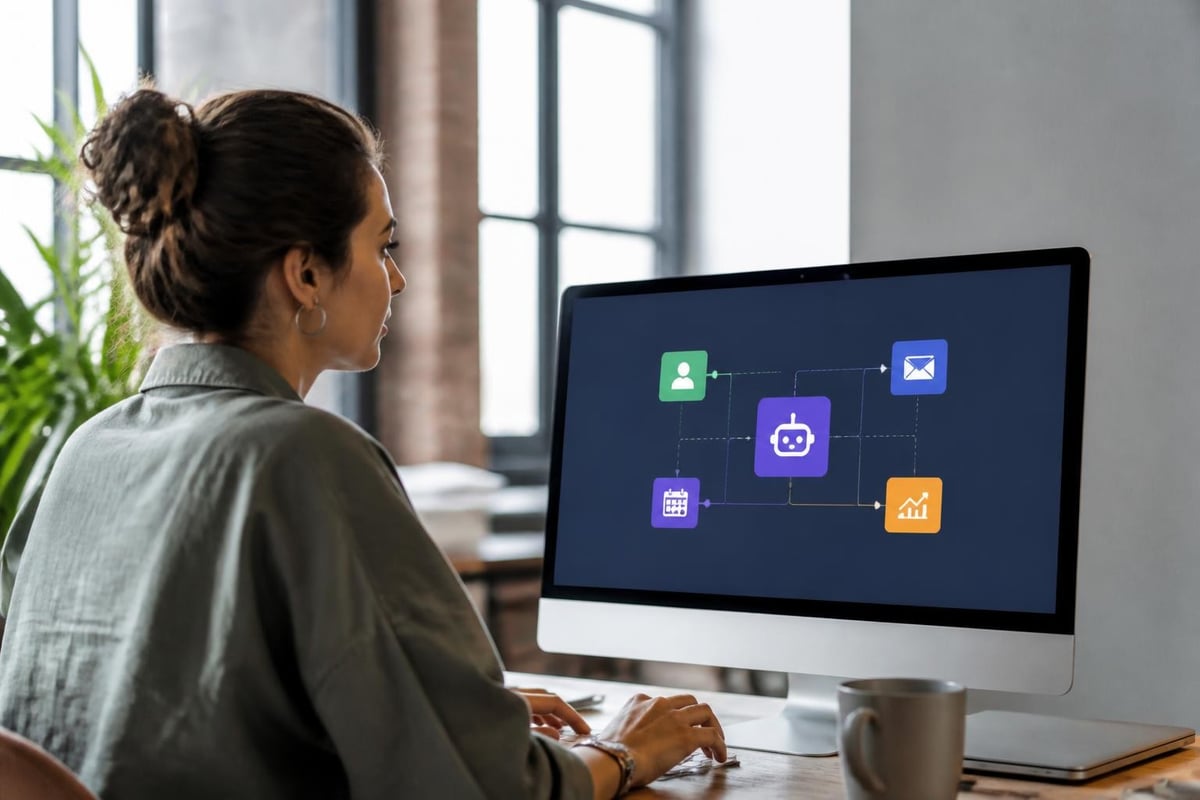
Organizations implementing these digital workers report significant improvements in response times and operational consistency. According to research on AI adoption patterns, businesses that successfully integrate AI employees see measurable gains in both efficiency metrics and employee satisfaction, as human team members focus on higher-value strategic work.
Implementation Strategies for AI Employees
Deploying AI employees requires careful planning and infrastructure considerations. The traditional approach demanded extensive technical resources, but modern platforms have eliminated these barriers through no-code solutions that democratize access to AI workforce technology.
Technical Requirements and Platform Selection
| Consideration | Traditional Approach | Modern Platform Approach |
|---|---|---|
| Setup Time | Weeks to months | Hours to days |
| Technical Skills | Programming required | No coding necessary |
| Infrastructure | Server maintenance | Fully hosted solution |
| Scalability | Manual configuration | Automatic scaling |
| Language Support | Limited to implementation | 90+ languages native |
The shift toward hosted AI workforce platforms has transformed implementation timelines dramatically. Businesses no longer need dedicated IT teams to deploy and maintain AI employees. Instead, they can configure digital workers through intuitive interfaces that connect directly to existing business systems.
When evaluating platforms for AI employee deployment, prioritize solutions that offer:
- Native integrations with your current technology stack
- Multilingual capabilities for global operations
- Real-time action execution beyond simple responses
- Transparent monitoring and analytics for performance tracking
- Secure data handling with enterprise-grade protection
For companies requiring custom software solutions to complement their AI employee infrastructure, partnering with experienced development teams ensures seamless integration across proprietary systems.
Department-Specific Deployment Models
AI employees excel when deployed with clear role definitions aligned to specific business functions. Sales teams benefit from AI employees that qualify leads, schedule demonstrations, and update opportunity records automatically. Support departments leverage AI employees for ticket triage, common issue resolution, and escalation management.
The hospitality industry demonstrates particularly strong AI employee applications. Hotels use digital workers to manage reservations, answer guest inquiries in multiple languages, and coordinate service requests. Specialized solutions for hotels showcase how industry-specific AI employee configurations can address unique operational challenges.
Marketing departments deploy AI employees for content distribution, campaign monitoring, and lead nurturing sequences. These digital workers maintain consistent brand voice across channels while adapting messaging based on audience engagement patterns.
Measuring AI Employee Performance and ROI
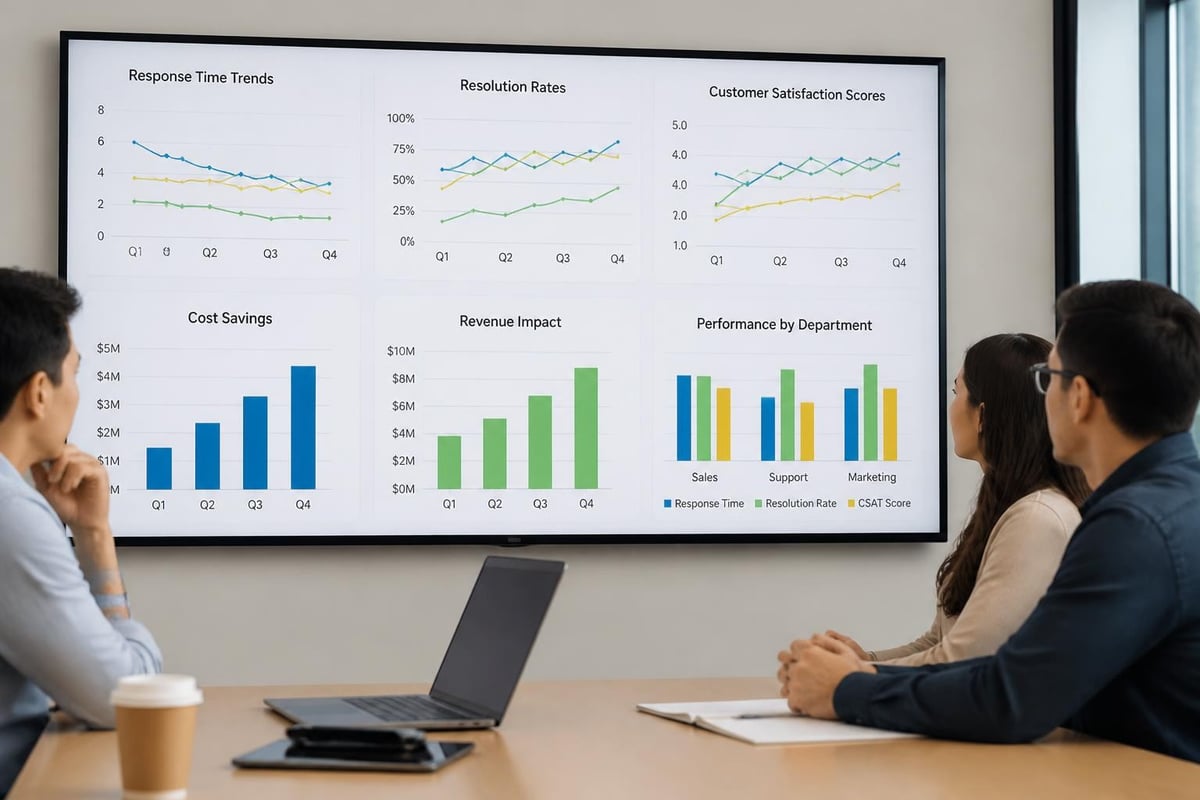
Quantifying the impact of AI employees requires metrics that capture both efficiency gains and quality improvements. Organizations tracking these implementations focus on several key performance indicators that demonstrate tangible business value.
Financial and Operational Metrics
The cost-benefit analysis of AI employees reveals compelling economics. A single digital worker can handle workloads equivalent to multiple human employees, operating continuously without breaks or time-off requirements. Understanding AI employee costs helps businesses project accurate ROI timelines.
Key metrics for tracking AI employee performance:
- Response time reduction from hours to seconds for customer inquiries
- Resolution rate percentage for issues handled without human intervention
- Cost per interaction compared to traditional staffing models
- Customer satisfaction scores across AI-managed touchpoints
- Revenue attribution for AI-driven sales and upsells
Organizations implementing AI employees through comprehensive platforms report average response time improvements of 85% and handling capacity increases exceeding 300% within the first quarter of deployment.
Quality Assurance and Continuous Improvement
Maintaining high-quality AI employee performance requires ongoing monitoring and refinement. Unlike static automation, these digital workers improve through machine learning feedback loops that incorporate successful interaction patterns.
Effective quality assurance programs include:
- Regular conversation audits to identify improvement opportunities
- Customer feedback integration for service quality enhancement
- Performance benchmarking against established standards
- Knowledge base updates reflecting new products and policies
- A/B testing of different response strategies and workflows
The capability to understand AI workplace integration becomes crucial as organizations scale their digital workforce. Teams that establish clear performance frameworks before deployment achieve faster time-to-value and higher adoption rates.
Integration Challenges and Solutions
While AI employees offer significant advantages, successful implementation requires addressing common integration obstacles. Organizations that anticipate these challenges and develop mitigation strategies achieve smoother deployments and faster ROI realization.
System Connectivity and Data Flow
Modern businesses operate across dozens of applications and platforms. AI employees must access these systems seamlessly to execute their designated functions. The complexity increases when dealing with legacy systems, custom databases, and proprietary software.
Solutions that provide extensive integration options eliminate technical roadblocks by offering pre-built connectors for popular business tools. This approach accelerates deployment while reducing the burden on internal IT resources.
| Integration Type | Common Use Cases | Implementation Complexity |
|---|---|---|
| CRM Systems | Contact updates, deal tracking | Low with native connectors |
| Communication Platforms | Multi-channel messaging | Low with API access |
| Booking Systems | Calendar management, reservations | Medium with custom fields |
| Payment Processing | Transaction completion, invoicing | Medium with security requirements |
| Analytics Tools | Performance reporting, insights | Low with webhook support |
Organizations comparing different AI workforce solutions should evaluate integration capabilities as a primary selection criterion, as system connectivity directly impacts the breadth of tasks AI employees can handle autonomously.
Change Management and Team Adoption
The introduction of AI employees into existing teams requires thoughtful change management. Research on work design and AI adoption demonstrates that employee perceptions significantly influence successful integration outcomes.
Successful adoption strategies include:
- Transparent communication about AI employee roles and capabilities
- Training programs that demonstrate how human-AI collaboration works
- Clear responsibility delineation between digital and human workers
- Feedback mechanisms for continuous improvement suggestions
- Success story sharing highlighting positive business impacts
Teams that view AI employees as collaborative partners rather than replacements report higher satisfaction and better performance outcomes. The focus shifts from task completion to strategic oversight, allowing human employees to concentrate on complex problem-solving and relationship building.
Industry-Specific Applications and Use Cases
Different sectors leverage AI employees in unique ways that reflect their operational priorities and customer interaction patterns. Examining these industry-specific implementations provides valuable insights for businesses considering AI workforce adoption.
E-commerce and Retail Operations
Online retailers deploy AI employees across the entire customer journey, from initial product inquiries through post-purchase support. These digital workers handle size recommendations, inventory questions, order tracking, and return processing simultaneously across multiple customer conversations.
The scalability becomes particularly valuable during peak shopping periods when human teams would require significant temporary staffing. AI employees maintain consistent service quality regardless of volume fluctuations, processing thousands of concurrent interactions without degradation.
Hospitality and Service Industries
Hotels, restaurants, and service businesses benefit from AI employees managing reservations, guest communications, and service coordination. The multilingual capabilities prove especially valuable for international properties serving diverse clientele.
Documentation on working hours configuration demonstrates how hospitality businesses customize AI employee availability to match property operations, ensuring guests receive immediate assistance regardless of time zone differences.

Professional Services and B2B Operations
Companies providing professional services use AI employees for appointment scheduling, client communication, and project status updates. These implementations free consultants, accountants, and advisors to focus on billable client work while ensuring consistent administrative support.
B2B sales organizations deploy AI employees for lead qualification, meeting coordination, and proposal follow-up. The digital workers maintain persistent engagement with prospects across extended sales cycles that might span months.
Future Developments in AI Employee Technology
The trajectory of AI employee capabilities points toward increasingly sophisticated autonomous operations. Understanding emerging trends helps businesses prepare infrastructure and processes for next-generation implementations.
Advanced Reasoning and Decision-Making
Current AI employees excel at structured workflows and pattern-based decision-making. Emerging developments focus on enhanced reasoning capabilities that allow digital workers to handle more ambiguous situations requiring judgment calls.
These advancements enable AI employees to:
- Navigate complex multi-step problems without predefined workflows
- Identify and escalate edge cases based on nuanced contextual factors
- Optimize processes autonomously by analyzing performance data
- Coordinate with other AI employees for cross-functional initiatives
- Adapt communication styles based on individual customer preferences
Organizations exploring what AI employees can accomplish find that capability boundaries continue expanding as underlying models improve and training methodologies advance.
Predictive Capabilities and Proactive Operations
The evolution from reactive to proactive AI employees represents a significant operational shift. Rather than waiting for customer inquiries or system triggers, next-generation digital workers anticipate needs and initiate appropriate actions.
Predictive AI employees analyze patterns to forecast customer requirements, inventory needs, and potential service issues before they manifest. This proactive approach transforms business operations from responsive to anticipatory, creating competitive advantages through superior customer experiences.
Research examining AI's impact on job satisfaction indicates that as AI employees take on more predictive and proactive responsibilities, human workers report increased job meaningfulness through focus on strategic and creative contributions.
Governance and Compliance Considerations
Deploying AI employees across business operations requires robust governance frameworks ensuring regulatory compliance, data protection, and ethical operation. Organizations must address these considerations during planning phases to avoid implementation setbacks.
Data Privacy and Security Protocols
AI employees process sensitive customer information, transaction data, and proprietary business intelligence. Implementing appropriate security measures protects both the organization and its customers while maintaining AI employee effectiveness.
Essential security practices include:
- End-to-end encryption for data transmission and storage
- Role-based access controls limiting AI employee system permissions
- Audit logging capturing all AI employee actions and decisions
- Regular security assessments identifying potential vulnerabilities
- Compliance verification ensuring adherence to industry regulations
Knowledge management systems that power AI employees must incorporate data governance policies, ensuring digital workers only access information appropriate to their designated functions.
Transparency and Accountability Frameworks
Customers and employees deserve clarity about when they interact with AI employees versus human team members. Transparent disclosure builds trust while meeting regulatory requirements in many jurisdictions.
Accountability frameworks should establish:
| Element | Purpose | Implementation |
|---|---|---|
| Identification Protocols | Clear AI employee disclosure | Automatic introduction in conversations |
| Escalation Pathways | Human oversight access | Defined trigger conditions |
| Decision Documentation | Audit trail creation | Comprehensive logging systems |
| Performance Responsibility | Ownership assignment | Management oversight structure |
| Error Correction Processes | Issue resolution procedures | Feedback integration workflows |
Organizations that establish comprehensive governance before deployment avoid reactive policy development and maintain consistent operational standards as their AI workforce scales.
Scaling Your AI Employee Workforce
Growth strategies for AI employee deployments differ fundamentally from traditional hiring approaches. Understanding these dynamics enables organizations to expand their digital workforce strategically while maintaining quality and efficiency.
Incremental Deployment Models
Successful AI employee scaling typically follows a phased approach, beginning with specific high-value use cases before expanding to additional functions. This strategy allows organizations to develop expertise, refine processes, and demonstrate value before committing extensive resources.
Recommended scaling sequence:
- Pilot deployment in controlled environment with single function
- Performance validation against established success metrics
- Process refinement based on initial learnings and feedback
- Gradual expansion to additional departments or use cases
- Full integration across comprehensive business operations
Companies can explore detailed implementation guides that outline best practices for configuring AI employees across different business functions and scaling scenarios.
Resource Allocation and Infrastructure Planning
Unlike human hiring that requires linear resource increases, AI employee scaling offers near-exponential capacity growth with minimal incremental investment. This economic model enables rapid expansion when business conditions demand increased operational capacity.
Planning considerations include bandwidth for concurrent conversations, integration complexity as system connections multiply, and knowledge base maintenance as AI employees handle broader responsibility ranges. Organizations leveraging hosted platforms avoid infrastructure management burdens while maintaining scaling flexibility.
The comparison between different AI workforce platforms reveals significant variance in scaling capabilities, with some solutions requiring manual configuration for each new AI employee while others offer template-based rapid deployment.
AI employees represent a transformative approach to business operations, offering unprecedented scalability, consistency, and efficiency across critical functions from customer support to sales operations. The technology has matured beyond experimental applications into production-ready solutions delivering measurable ROI for organizations across industries. AI Textura provides the comprehensive platform businesses need to deploy AI employees without technical complexity, offering hosted infrastructure that manages sales, support, marketing, and HR operations through intelligent agents capable of real actions in over 90 languages trusted by companies worldwide.